
Jan Padrnos: TOTAL ART WORK OF THE 21ST CENTURY
Architectural work and design in harmonious connection
Valdštejn's House, Brtnice
September 16 - October 30, 2007
Exhibition organizer: The Town of Brtnice and the Moravian Gallery in Brno
Exhibition author: Martina Straková
Jan Padrnos is primarily known for his designs of minimalist yet very imaginative furniture. In recent years, he has progressed from interior design to architecture. The houses he designs are furnished with his own furniture, recalling the ideals of architecture at the beginning of the 20th century. The exhibition will present examples of furniture design complemented by photographs of completed buildings.
Jan Padrnos (*1967 in Kutná Hora) entered the world of professional design shortly before the year 2000. His path led him through the Faculty of Mechanical Engineering at Czech Technical University in Prague and four years of practice at Ahrend - Professional Interiors, where he encountered design in the role of interior architect. This was followed by a return home to Třebíč. The background of the family business allowed him to realize some of his visions of furniture design. His truly professional career began with the establishment of his company Blackbox in 2000. Under this brand, Jan Padrnos exhibited his works at prestigious modern design shows in Milan, New York, Saint-Étienne, and the furniture of the brand Blackbox became part of several collections of Czech design presented at exhibitions in Vienna, Brussels, Essen, etc. Works by Jan Padrnos are also represented in the collections of the Moravian Gallery in Brno and the Museum of Applied Arts in Prague.
The unity of architecture, artistic craftsmanship, and fine arts, the combination of all arts into a single harmonious whole, a total work of art; all of these could be explanations of what Gesamtkunstwerk is. Designing houses including interiors is a desire of many architects, yet often the interiors are furnished with furniture that they did not design themselves. Jan Padrnos is a designer who, after creating a number of remarkable furniture designs, has turned towards architecture. In his realizations, he incorporates his own furniture pieces. The designs and architectural solutions of Jan Padrnos are characterized by wit, simplicity of solutions, functionality, and elegance, and they possess an inner tension. Great emphasis is placed on the selection of materials, which are very high-quality, often new, and unusual in their use.
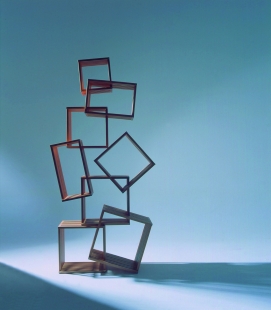
The furniture collection, which has been developing since 1997, today comprises nearly fifty realized designs. Works like Skulptura, which creates the illusion of a wooden structure that is just collapsing, were an artistically interesting experiment on the boundary of fine art. In addition to three common dimensions that we are used to in furniture, a new measure of time is now added, the frozen second of a fall. At the same time, however, the designer was creating designs that anxiously fought against time, such as the Heavy industry library welded from corroded steel. Another library, Regal, made of noble stainless steel and veneer wood, denies the classic standards of library construction. The supporting verticals are divided, raising the question of whether they can actually bear anything? Do they not, on the contrary, constrain the shelves with books that would otherwise levitate towards the heights of knowledge? The immense originality of approaches to processing a single theme reminds us of the statement by Étienne-Louise Boullée: "if there is a theme that must attract an architect and at the same time stimulate his ingenuity and resourcefulness, then it is the design of a library" (1784). Boullée had in mind the building of a library, but why not apply this statement to the solution of a furniture piece!
A very prosaic inspiration lies behind the design of the table Snowcache. The delicate hollow of a pit in the snow, evoked by its name, was transferred to a Corian slab and reached the heights of Czech design. In the same year, another model of a small table Mies was created. The name and shape of the table hint at the direction in which its author likes to turn. The diagonally positioned legs of the table remind of a similar construction of a cocktail table designed in 1927 by Ludwig Mies van der Rohe and used in the interiors of the Tugendhat villa in Brno.
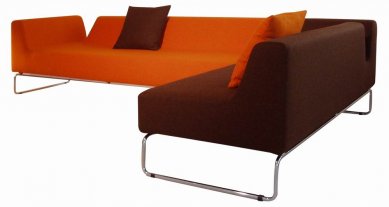
Most recently, Jan Padrnos has been designing upholstered furniture for the newly revived UP brand. It seems as if the furniture-making past of Třebíč is announcing itself again, connected in the interwar period with the company United UP Works. Jiří Pelcl, the Olgoj Chorchoj studio, and Jan Padrnos were asked to create the first furniture designs. At the exhibition, both of Padrnos's seating sets Couple and Urbano will be presented, one still as a prototype, the other as a hot factory product.
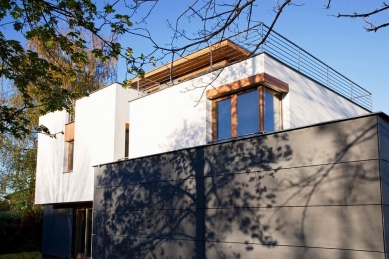
In architectural creations, Jan Padrnos develops similar principles as in design. Again, great emphasis is placed on construction and material. He enjoys playing with mass, covering buildings with wood, stone, and sheet metal. Among his realizations, two family houses in Děčín stand out. The first, completed in 2003, astonishes with its layout formed by a few disconnected walls. Upon viewing the realization, we understand that the connections of the walls form enormous windows opening the house to nature. The house is maximally open even within the interior. The main living room on the ground floor is conceived as a space unfolding both horizontally with a smooth transition into the dining room and kitchen, and vertically in connection with the study on the upper floor. The neighboring second house, on the other hand, is very compact in mass with precisely defined floors. It consists of two blocks placed crosswise over each other. The upper body extends on consoles over the ground floor and foreshadows the picturesque view that the location of both houses allows. Of a total of twelve designs for family houses, half have been realized so far, and another two are currently under construction.
The exhibition was created in collaboration with the Town of Brtnice and the Moravian Gallery in Brno.
September 16 - October 30, 2007
Exhibition organizer: The Town of Brtnice and the Moravian Gallery in Brno
Exhibition author: Martina Straková
Jan Padrnos is primarily known for his designs of minimalist yet very imaginative furniture. In recent years, he has progressed from interior design to architecture. The houses he designs are furnished with his own furniture, recalling the ideals of architecture at the beginning of the 20th century. The exhibition will present examples of furniture design complemented by photographs of completed buildings.
Jan Padrnos (*1967 in Kutná Hora) entered the world of professional design shortly before the year 2000. His path led him through the Faculty of Mechanical Engineering at Czech Technical University in Prague and four years of practice at Ahrend - Professional Interiors, where he encountered design in the role of interior architect. This was followed by a return home to Třebíč. The background of the family business allowed him to realize some of his visions of furniture design. His truly professional career began with the establishment of his company Blackbox in 2000. Under this brand, Jan Padrnos exhibited his works at prestigious modern design shows in Milan, New York, Saint-Étienne, and the furniture of the brand Blackbox became part of several collections of Czech design presented at exhibitions in Vienna, Brussels, Essen, etc. Works by Jan Padrnos are also represented in the collections of the Moravian Gallery in Brno and the Museum of Applied Arts in Prague.
The unity of architecture, artistic craftsmanship, and fine arts, the combination of all arts into a single harmonious whole, a total work of art; all of these could be explanations of what Gesamtkunstwerk is. Designing houses including interiors is a desire of many architects, yet often the interiors are furnished with furniture that they did not design themselves. Jan Padrnos is a designer who, after creating a number of remarkable furniture designs, has turned towards architecture. In his realizations, he incorporates his own furniture pieces. The designs and architectural solutions of Jan Padrnos are characterized by wit, simplicity of solutions, functionality, and elegance, and they possess an inner tension. Great emphasis is placed on the selection of materials, which are very high-quality, often new, and unusual in their use.
The furniture collection, which has been developing since 1997, today comprises nearly fifty realized designs. Works like Skulptura, which creates the illusion of a wooden structure that is just collapsing, were an artistically interesting experiment on the boundary of fine art. In addition to three common dimensions that we are used to in furniture, a new measure of time is now added, the frozen second of a fall. At the same time, however, the designer was creating designs that anxiously fought against time, such as the Heavy industry library welded from corroded steel. Another library, Regal, made of noble stainless steel and veneer wood, denies the classic standards of library construction. The supporting verticals are divided, raising the question of whether they can actually bear anything? Do they not, on the contrary, constrain the shelves with books that would otherwise levitate towards the heights of knowledge? The immense originality of approaches to processing a single theme reminds us of the statement by Étienne-Louise Boullée: "if there is a theme that must attract an architect and at the same time stimulate his ingenuity and resourcefulness, then it is the design of a library" (1784). Boullée had in mind the building of a library, but why not apply this statement to the solution of a furniture piece!
A very prosaic inspiration lies behind the design of the table Snowcache. The delicate hollow of a pit in the snow, evoked by its name, was transferred to a Corian slab and reached the heights of Czech design. In the same year, another model of a small table Mies was created. The name and shape of the table hint at the direction in which its author likes to turn. The diagonally positioned legs of the table remind of a similar construction of a cocktail table designed in 1927 by Ludwig Mies van der Rohe and used in the interiors of the Tugendhat villa in Brno.
Most recently, Jan Padrnos has been designing upholstered furniture for the newly revived UP brand. It seems as if the furniture-making past of Třebíč is announcing itself again, connected in the interwar period with the company United UP Works. Jiří Pelcl, the Olgoj Chorchoj studio, and Jan Padrnos were asked to create the first furniture designs. At the exhibition, both of Padrnos's seating sets Couple and Urbano will be presented, one still as a prototype, the other as a hot factory product.
In architectural creations, Jan Padrnos develops similar principles as in design. Again, great emphasis is placed on construction and material. He enjoys playing with mass, covering buildings with wood, stone, and sheet metal. Among his realizations, two family houses in Děčín stand out. The first, completed in 2003, astonishes with its layout formed by a few disconnected walls. Upon viewing the realization, we understand that the connections of the walls form enormous windows opening the house to nature. The house is maximally open even within the interior. The main living room on the ground floor is conceived as a space unfolding both horizontally with a smooth transition into the dining room and kitchen, and vertically in connection with the study on the upper floor. The neighboring second house, on the other hand, is very compact in mass with precisely defined floors. It consists of two blocks placed crosswise over each other. The upper body extends on consoles over the ground floor and foreshadows the picturesque view that the location of both houses allows. Of a total of twelve designs for family houses, half have been realized so far, and another two are currently under construction.
The exhibition was created in collaboration with the Town of Brtnice and the Moravian Gallery in Brno.
The English translation is powered by AI tool. Switch to Czech to view the original text source.
0 comments
add comment