
BETON, SURFACE OF ARCHITECTURE
Exhibition at the Architecture Gallery Brno, October 1-29, 2008
The Use of Concrete Not Only as an Invisible Building Material
The aim of the exhibition and accompanying publication is to highlight the possibilities of concrete structures and the diversity of concrete surfaces in relation to their significance for architectural concepts. How is the appearance of a building influenced by its surface? How is our perception of a structure affected by our perception of its concrete surface? Alongside questions about whether concrete is “truly” durable, cheap, clean, maintenance-free, and practical, extensive possibilities for aesthetically utilizing everything that its surface offers remain overlooked.
The exhibition will provide a brief overview of technologies, explain some technical terms, but above all, it will present the possibilities of using concrete as an artistic material in a wide range of projects from engineering structures and bridges to civic and residential buildings. There will also be specialties such as accessory elements for urban parterres and a completely new element - graphic concrete. Both Czech and foreign concrete building projects from the last 5 years will be showcased.
The exhibition is organized by the Center for Architecture in collaboration with the publisher Beton TKS. The exhibition will be accompanied by lectures on the topic of “The Use of Concrete and Practice,” with a keynote lecture by the author of the industrial design of "graphic concrete," Finnish designer Mr. Samuli Naamanka.
Concrete, one of the most common building materials, is primarily used for load-bearing structures. Although it is a material with a lifespan of fifty years or more, it is almost always covered - clad, coated, sprayed, painted - with another visible layer whose durability is usually just a matter of a few years. The reason is usually doubts about the suitability, acceptability, and possibilities of finishing a concrete surface under domestic conditions as a final visible layer. Fortunately, in the last ten years abroad, and gradually in our country, constructions made of “visible concrete” have started to emerge.
When we say “concrete,” it unconsciously evokes a feeling in us of something unfinished, raw, and functional. Is that really the case, or is it rather the result of a generally ingrained opinion that concrete can only be used as a purely structural material to transfer loads to foundations without any aspirations for aesthetic value? This opinion is certainly supported by the unpleasant experiences of the public from past times that have survived to today's era (see highway D1), as well as the notion that producing concrete “is easy.” This is evidently true if it only has to serve as filler material. However, if we want more from concrete (strength, impermeability, resistance to chemical effects, frost resistance, well-finished surfaces, etc.), the process of preparation, production, processing, and curing becomes a highly sophisticated matter, a hi-tech endeavor. One thing is certain: CONCRETE CAN DO IT.
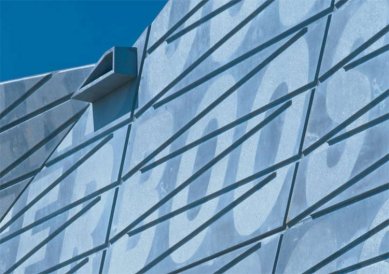
Le Corbusier used concrete surfaces for almost “sculptural” shaping of his buildings. In combination with lighting effects, the rough surfaces of his “beton brut” radiate strength and a certain emotional sensuality (Monastery La Tourette, Eveux, 1960). Specially treated surfaces of concrete buildings by the Japanese architect Tadao Ando evoke a sense that we are touching something velvety soft - a high degree of haptic perception (Koshino House, Ashinga, 1979 -81). Swiss architects Jacques Herzog and Pierre de Meuron used “graphic” concrete on the façade of the Eberswalde vocational school library (1999) in combination with etched glass panels. The resulting impression erases the difference between concrete and glass.
Examples show that concrete gives us a sense of solidity, protection, safety, and security (fortifications, bridges, dams), but at the same time, if used as a material with architectural and artistic sensitivity, it also impacts our aesthetic perception (representative buildings such as theaters, concert halls, libraries, museums, and galleries).
It is impossible for me to list all the possibilities of various surface treatments for concrete. Their number continues to grow with the development of new technologies. We are limited only by the boundaries of our imagination and our experiences. Every month we can see or read about new ways of using visible concrete. A relationship is formed between the building (structure, bridge) and its surroundings. The design of the building, its form, proportions, interior, and exterior shape this relationship. Visible concrete helps to articulate the architect's intention precisely through optical and other sensory impressions.
The aim of the exhibition and accompanying publication is to highlight the possibilities of concrete structures and the diversity of concrete surfaces in relation to their significance for architectural concepts. How is the appearance of a building influenced by its surface? How is our perception of a structure affected by our perception of its concrete surface? Alongside questions about whether concrete is “truly” durable, cheap, clean, maintenance-free, and practical, extensive possibilities for aesthetically utilizing everything that its surface offers remain overlooked.
The exhibition will provide a brief overview of technologies, explain some technical terms, but above all, it will present the possibilities of using concrete as an artistic material in a wide range of projects from engineering structures and bridges to civic and residential buildings. There will also be specialties such as accessory elements for urban parterres and a completely new element - graphic concrete. Both Czech and foreign concrete building projects from the last 5 years will be showcased.
The exhibition is organized by the Center for Architecture in collaboration with the publisher Beton TKS. The exhibition will be accompanied by lectures on the topic of “The Use of Concrete and Practice,” with a keynote lecture by the author of the industrial design of "graphic concrete," Finnish designer Mr. Samuli Naamanka.
Concrete, one of the most common building materials, is primarily used for load-bearing structures. Although it is a material with a lifespan of fifty years or more, it is almost always covered - clad, coated, sprayed, painted - with another visible layer whose durability is usually just a matter of a few years. The reason is usually doubts about the suitability, acceptability, and possibilities of finishing a concrete surface under domestic conditions as a final visible layer. Fortunately, in the last ten years abroad, and gradually in our country, constructions made of “visible concrete” have started to emerge.
When we say “concrete,” it unconsciously evokes a feeling in us of something unfinished, raw, and functional. Is that really the case, or is it rather the result of a generally ingrained opinion that concrete can only be used as a purely structural material to transfer loads to foundations without any aspirations for aesthetic value? This opinion is certainly supported by the unpleasant experiences of the public from past times that have survived to today's era (see highway D1), as well as the notion that producing concrete “is easy.” This is evidently true if it only has to serve as filler material. However, if we want more from concrete (strength, impermeability, resistance to chemical effects, frost resistance, well-finished surfaces, etc.), the process of preparation, production, processing, and curing becomes a highly sophisticated matter, a hi-tech endeavor. One thing is certain: CONCRETE CAN DO IT.
Le Corbusier used concrete surfaces for almost “sculptural” shaping of his buildings. In combination with lighting effects, the rough surfaces of his “beton brut” radiate strength and a certain emotional sensuality (Monastery La Tourette, Eveux, 1960). Specially treated surfaces of concrete buildings by the Japanese architect Tadao Ando evoke a sense that we are touching something velvety soft - a high degree of haptic perception (Koshino House, Ashinga, 1979 -81). Swiss architects Jacques Herzog and Pierre de Meuron used “graphic” concrete on the façade of the Eberswalde vocational school library (1999) in combination with etched glass panels. The resulting impression erases the difference between concrete and glass.
Examples show that concrete gives us a sense of solidity, protection, safety, and security (fortifications, bridges, dams), but at the same time, if used as a material with architectural and artistic sensitivity, it also impacts our aesthetic perception (representative buildings such as theaters, concert halls, libraries, museums, and galleries).
It is impossible for me to list all the possibilities of various surface treatments for concrete. Their number continues to grow with the development of new technologies. We are limited only by the boundaries of our imagination and our experiences. Every month we can see or read about new ways of using visible concrete. A relationship is formed between the building (structure, bridge) and its surroundings. The design of the building, its form, proportions, interior, and exterior shape this relationship. Visible concrete helps to articulate the architect's intention precisely through optical and other sensory impressions.
Michal Števula, editor of BETON TKS magazine
The English translation is powered by AI tool. Switch to Czech to view the original text source.
0 comments
add comment