
Café Emil in the Gallery of the City of Bratislava

Address:
Františkánske námestie 11,
Staré mesto,
Bratislava,
Slovakia
Investor:Galéria mesta Bratislavy, Wirtshaus
Project:2020–2021
Completion:2021–2022
Area:180 m2
Collaboration: Exteli (electrical installations); H_pro (plumbing, heating); Filip Slováček (HVAC, cooling); Timotej Kapinay (fire protection)
Main Contractor: Genesis ground construction
Main Contractor: Genesis ground construction
Companies
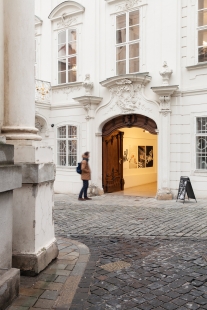
The Rokoko Palace from 1770 was designed for brewer Michael Spech, with Count Emil Mirbach as the last owner. This national cultural monument in the historic center of the city was adapted in the 1970s for the needs of the Bratislava City Gallery according to the design of architect Július Lehocký. In recent decades, partial infrastructural adjustments to the interior and renovation of the street facade have taken place. The subject of this project was the construction modifications and the change in the use of part of the ground floor of the northern wing of the palace for a new café operation and the opening of the gallery building as a barrier-free public cultural institution of the 21st century.
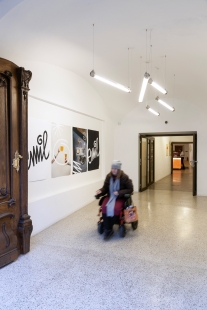
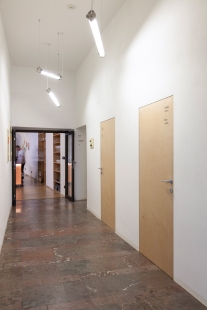
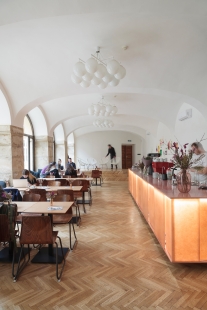
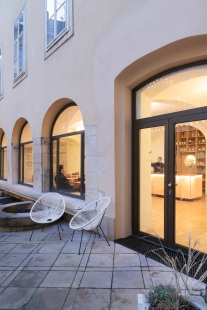
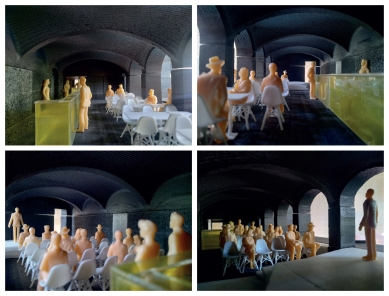
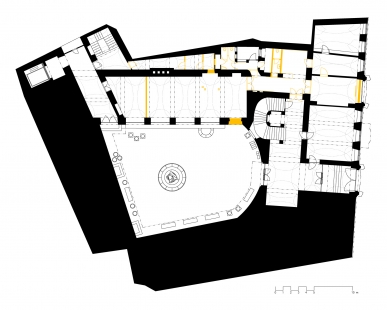
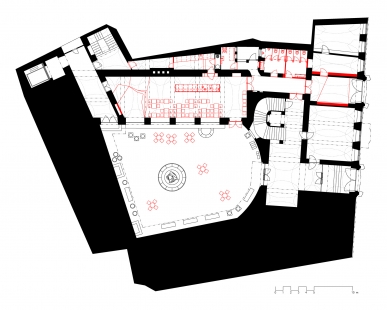
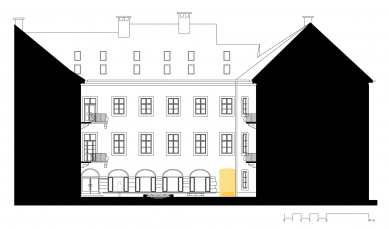
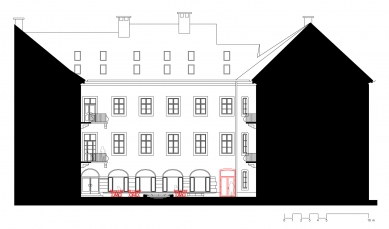
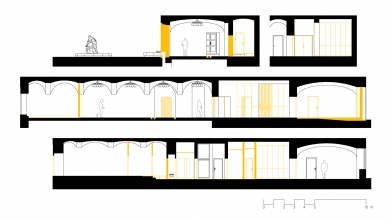
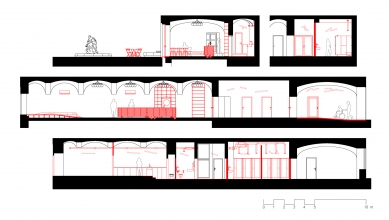
The design restores the original entrance gate, which had been bricked up from the inside for decades, and the passageway served as a meeting room without access to natural light. The restored "underpass" provides access to the existing secretariat (future gallery shop), newly expanded toilets, including a barrier-free one, and the main café space (in the location of the former gallery library and adjacent offices). The café further connects to a hallway with a new barrier-free elevator, which replaced the originally freight elevator. The longitudinal connection from the street is complemented by a transverse connection between the service corridor, the main space, and the outdoor courtyard through restored historical openings with contemporary infill.
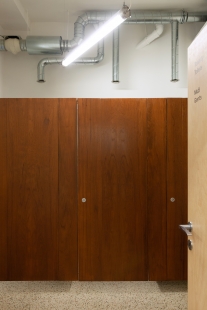
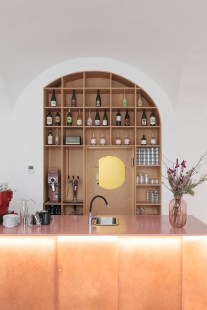
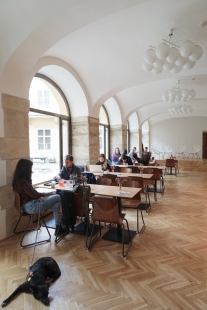
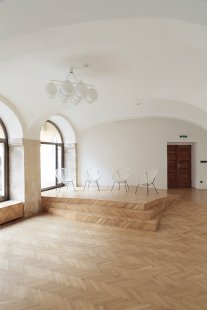
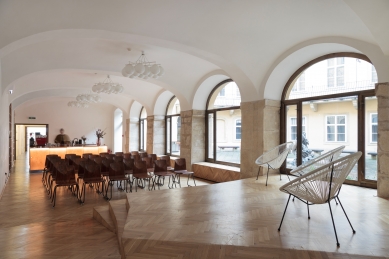
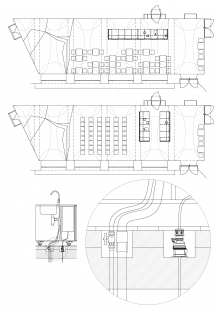
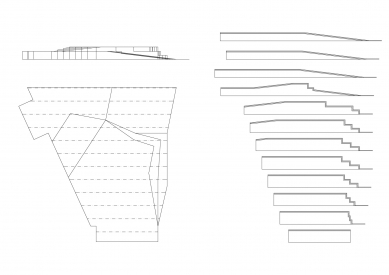
Barrier-free access and mobility are manifested in the sculptural shaping of the floor folds in the main space, in the variable segments of the mobile bar, and in the navigational vectors of the new hanging light fixtures. The historical layers of the building remain visible due to the architectural approach of "doing (almost) nothing" (keeping existing chandeliers, new glazed aluminum doors anodized in the shade of existing brass elements, terrazzo integrating color shades of original stone elements and later marble floors) and material recycling (reused stage floorboards and window sills, sanitary partitions from dismantled cladding panels, chairs from a hotel in Brno, floor grating from the Bratislava VÚVH). The mobility and translucent epoxy skin of the bar refer to the liveliness of the horse stable that historically existed here.
The design restores the original entrance gate, which had been bricked up from the inside for decades, and the passageway served as a meeting room without access to natural light. The restored "underpass" provides access to the existing secretariat (future gallery shop), newly expanded toilets, including a barrier-free one, and the main café space (in the location of the former gallery library and adjacent offices). The café further connects to a hallway with a new barrier-free elevator, which replaced the originally freight elevator. The longitudinal connection from the street is complemented by a transverse connection between the service corridor, the main space, and the outdoor courtyard through restored historical openings with contemporary infill.
Barrier-free access and mobility are manifested in the sculptural shaping of the floor folds in the main space, in the variable segments of the mobile bar, and in the navigational vectors of the new hanging light fixtures. The historical layers of the building remain visible due to the architectural approach of "doing (almost) nothing" (keeping existing chandeliers, new glazed aluminum doors anodized in the shade of existing brass elements, terrazzo integrating color shades of original stone elements and later marble floors) and material recycling (reused stage floorboards and window sills, sanitary partitions from dismantled cladding panels, chairs from a hotel in Brno, floor grating from the Bratislava VÚVH). The mobility and translucent epoxy skin of the bar refer to the liveliness of the horse stable that historically existed here.
n-1
The English translation is powered by AI tool. Switch to Czech to view the original text source.



0 comments
add comment