
Glass that works with the sun

04.11.2026 09:20
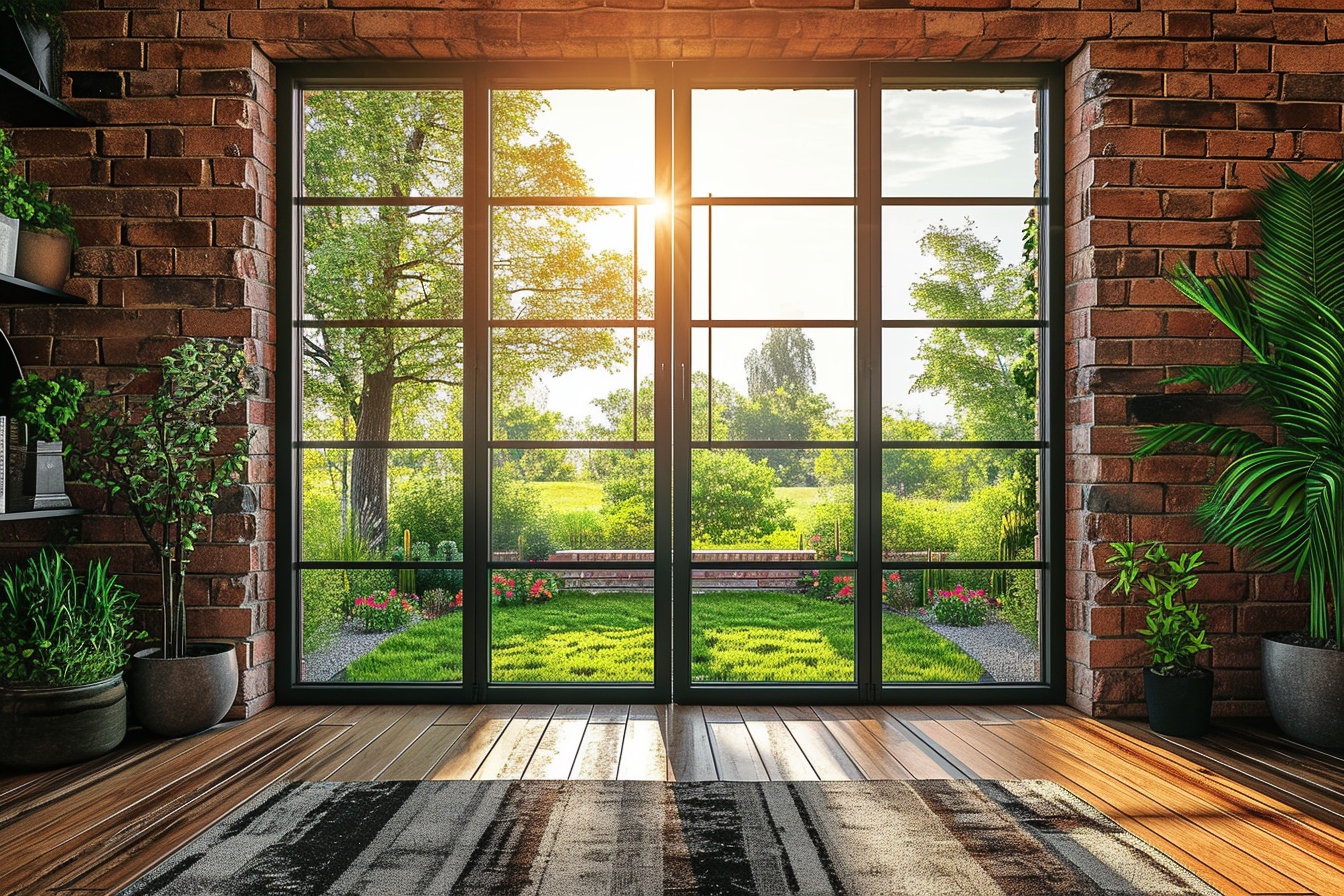 |
Glazed areas now make up a significant proportion of a family home's envelope – and as windows grow larger, so does their impact on the energy balance and summer comfort. Yet glazing is still routinely specified uniformly in building designs, with a single type used throughout. Specifying glass according to compass orientation is, however, one of the most effective tools available to designers.
Glazing as a major part of the building envelope
In a typical family home, glazed areas account for roughly a fifth of the external envelope, and considerably more in modern buildings with large-format windows and glazed garden-facing façades. The frame usually occupies no more than a fifth of the window area – meaning the insulating glass itself makes up the dominant portion of the opening. Its properties therefore affect not only heat loss, but also solar gains during the heating season and, conversely, the risk of overheating in summer.Triple glazing has meanwhile become standard – almost always in new builds, and often in renovations too. The number of panes has thus ceased to be a measure of quality. The real difference between glazing types that look identical is determined by a combination of two parameters: thermal transmittance Ug and solar factor g / SF.
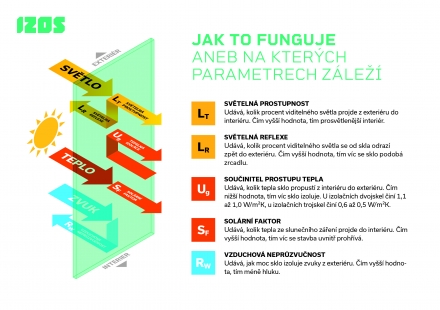
While high-quality triple glazing now typically achieves Ug values of around 0.5–0.6 W/m²K, the solar factor can vary by tens of percentage points between products. This is precisely where building orientation, and the choice of different glazing types, comes into play.
Why one type of glass is not enough for the whole house
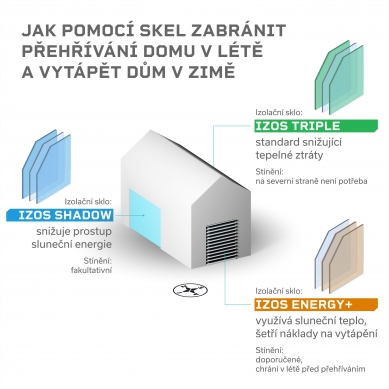
A uniform glazing specification always involves a compromise: glass with a high g-value overheats west-facing rooms, while glass with a low g-value deprives the south-facing façade of solar gains in winter. Combining several glazing types within a single building eliminates this compromise – without affecting the appearance of the façade.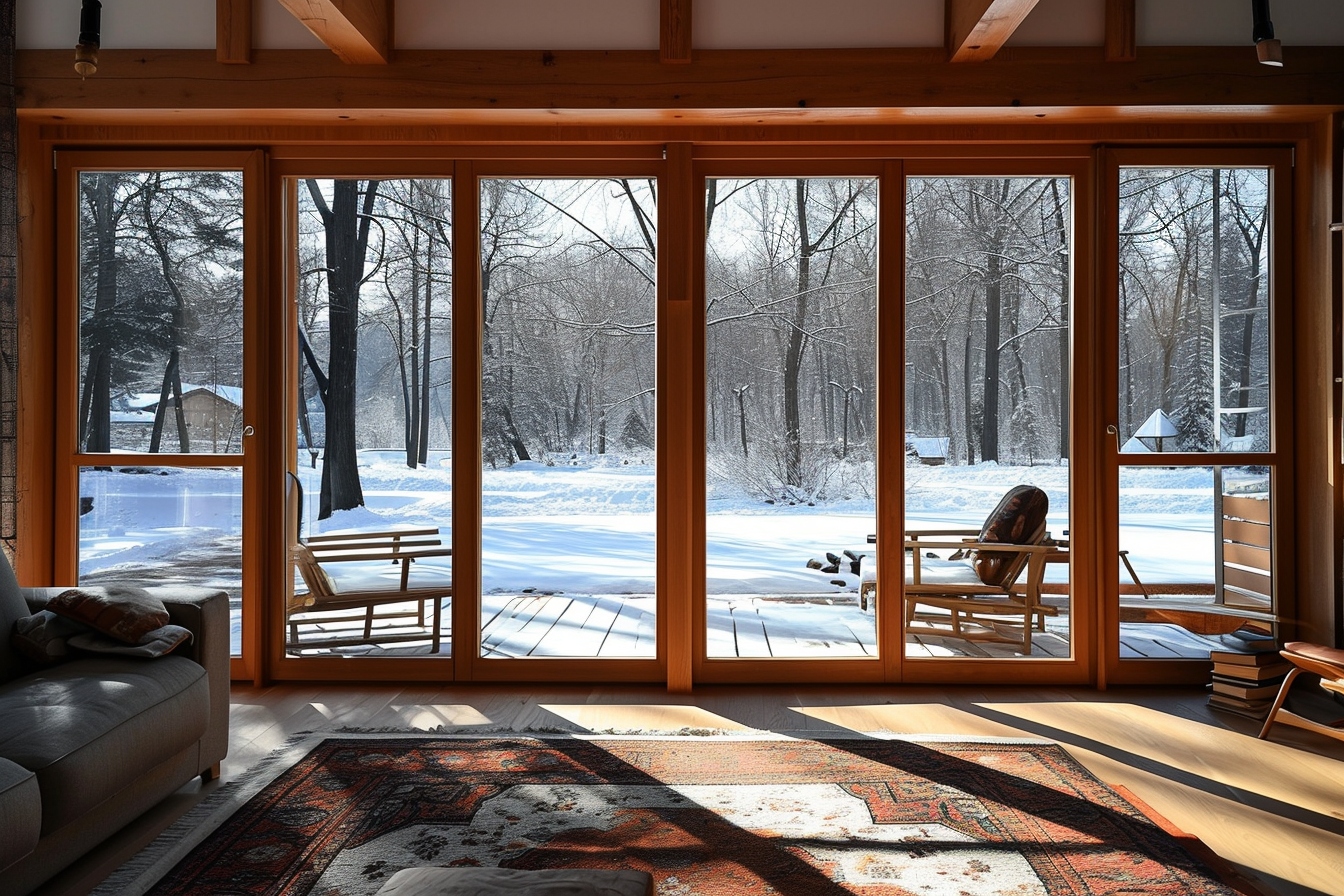 |
Three triple-glazing options, three strategies
HELUZ IZOS, the largest Czech manufacturer of insulating glazing, offers three triple-glazing variants for this orientation-based approach, all with identical thermal insulation but different responses to sunlight:| Ug [W/m²K] | Solar factor | Typical application | |
| IZOS ENERGY+ | 0.5 | 63% | south- and southeast-facing façades, maximising winter solar gains |
| IZOS SHADOW | 0.5 | 36% | west, east, large glazed areas at risk of overheating |
| IZOS TRIPLE | 0.5 | 52% | general-purpose insulating triple glazing, north-facing and less exposed façades |
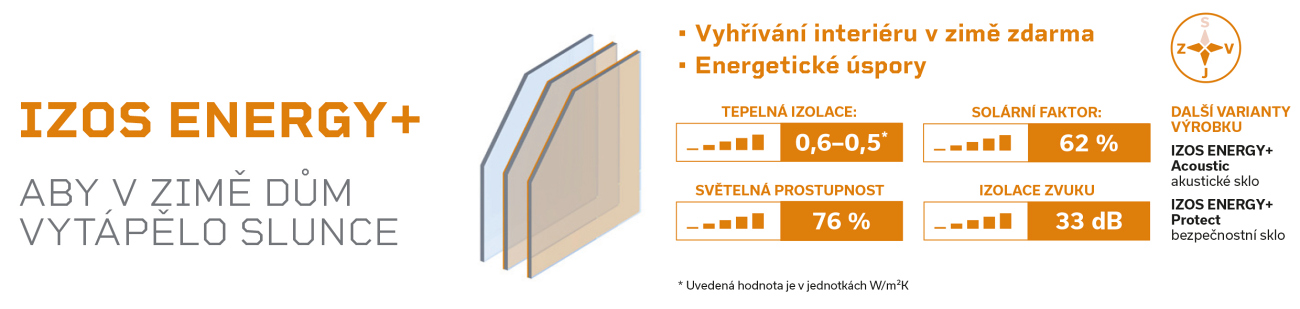 |
IZOS ENERGY+ ranks among the best products on the market with a solar factor of 63%, while maintaining a Ug value of 0.5 W/m²K. On a sunny winter day, it therefore allows a substantial proportion of solar energy into the interior.
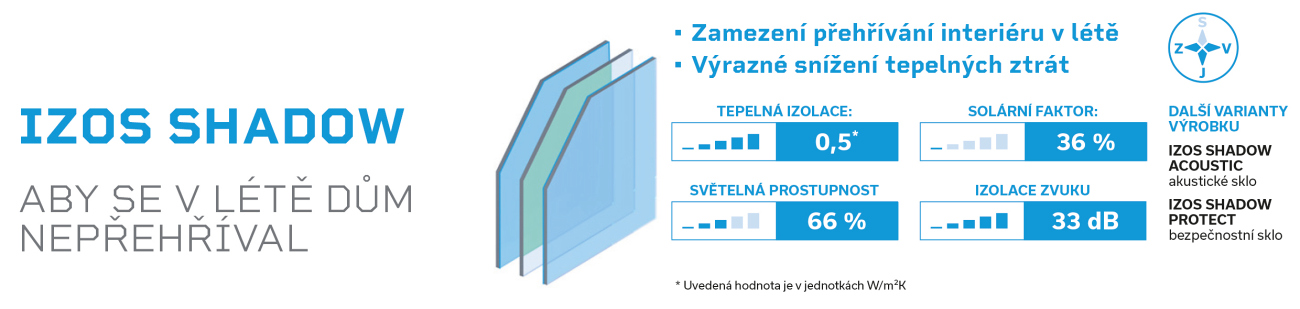 |
IZOS SHADOW is solar-control triple glazing with a metallic coating that reflects a substantial proportion of incoming solar energy. Its solar factor of 36% is roughly half that of conventional insulating glass, which can exceed 60%. The glass nevertheless has a neutral appearance, without coloured reflections, so it can be combined with other types without disrupting the visual consistency of the façade. Importantly, solar protection does not come at the expense of winter performance: Ug remains at 0.5 W/m²K. The experience of recent years, in which summer overheating has become one of the main problems in housing, makes it a logical choice for west- and east-facing façades as well as living spaces with extensive glazing.
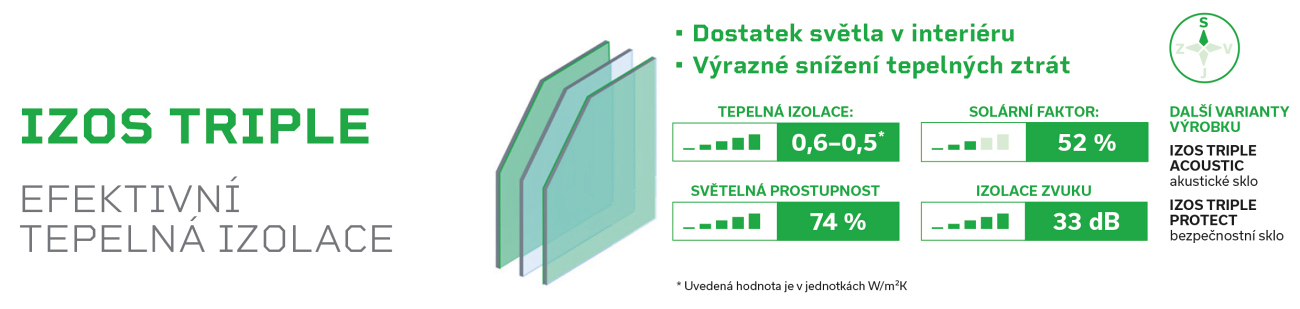 |
IZOS TRIPLE is a balanced insulating triple-glazing option, suitable where neither solar gains nor solar heat loads play a significant role – typically on the north side.
The English translation is powered by AI tool. Switch to Czech to view the original text source.
0 comments
add comment