
4 Most Common Mistakes When Choosing and Implementing Concrete Renders

Publisher
advertorial
05.12.2025 14:30
advertorial
05.12.2025 14:30
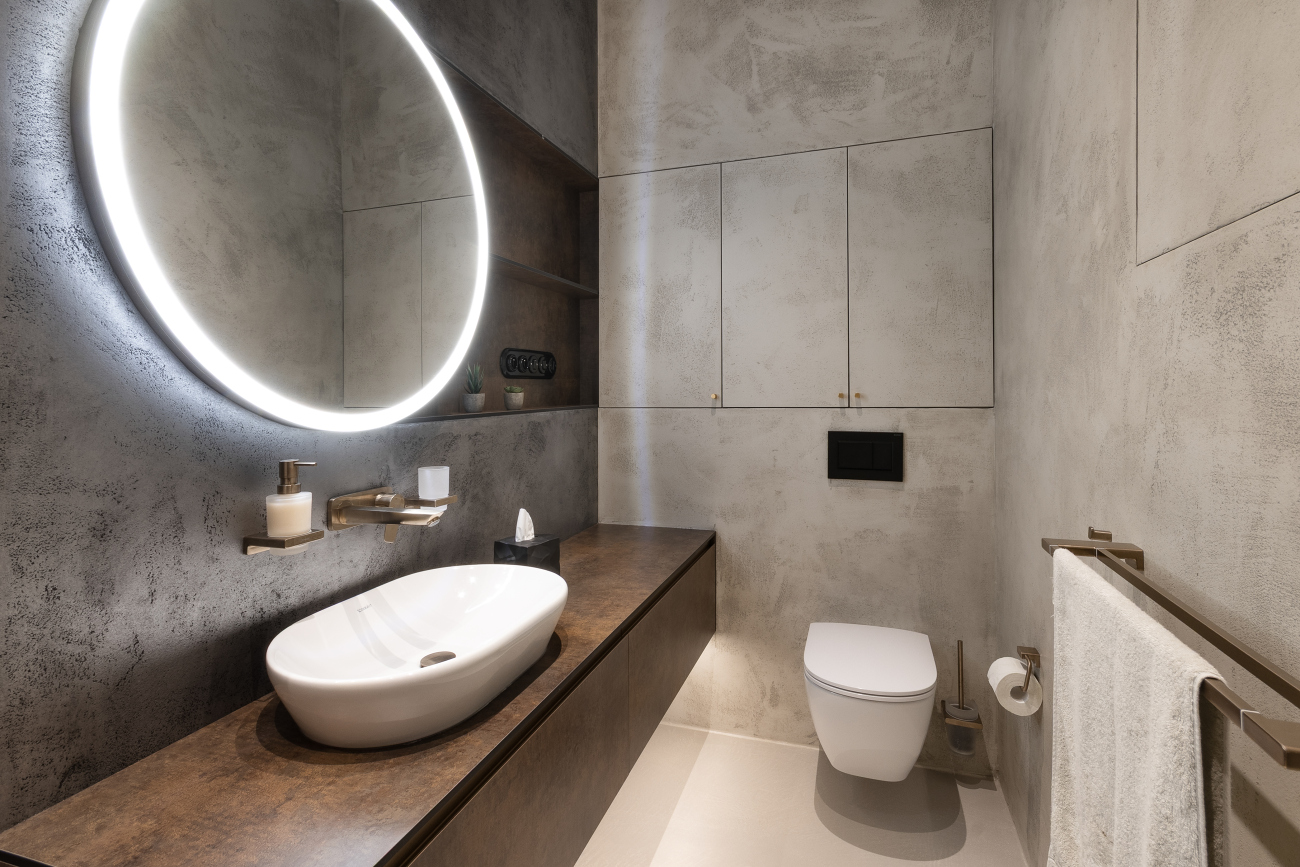 |
Concrete trowels are very popular and give the interior a unique appearance. However, for the result to meet expectations, it’s necessary to avoid several mistakes that can affect not only the appearance but also the durability of the surface. The experience of the company Němec s.r.o., which has been dedicated to trowels for almost 30 years, is summarized into the four most common mistakes and tips on how to avoid them.


1) Choosing the wrong type of trowel for the given space
Not all concrete trowels are the same. We distinguish between two basic types – cement-based trowels and epoxy trowels with a concrete appearance.- Cement trowels (e.g. Concrete Imitation®) are primarily suitable for walls. Their water resistance depends solely on the varnish, which is why they are not suitable for shower areas or floors. If the varnish deteriorates over time, the trowel will begin to absorb moisture, spots will form, and the surface may start to peel.
- Epoxy trowels (e.g. Betonepox®) are waterproof and resistant to chemicals. They are ideal for floors, bathrooms, and directly in shower areas, where regular cement trowels fail.


2) Underestimating the preparation of the substrate
If the substrate is not of high quality, a quality result cannot be expected. Dust, grease, unevenness, or remnants of old coatings cause poor adhesion. Even more crucial is the use of high-quality and strong adhesive, which ensures the correct cohesion of layers and the long lifespan of the entire trowel.Tip: The substrate must be solid, clean, and dry. Proper preparation – sanding and netting – is key. An experienced contractor will never skip these steps.

3) Prioritizing price over quality
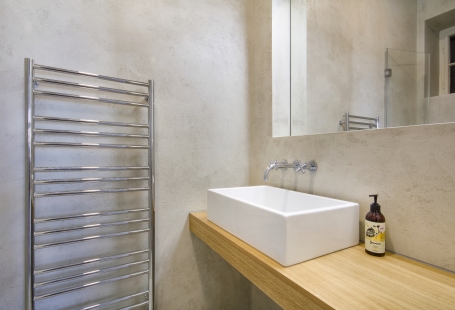
The trowel is not just about appearance – the difference in quality often only becomes apparent over time. A cheap solution usually means cheaper materials that have lower durability and shorter lifespans. Such trowels may lose their appearance over time, change color, or cease to fulfill their protective function – especially on floors and in bathrooms, where surfaces are most heavily loaded.Tip: When selecting, do not only look at price. Quality materials are an investment that pays off in the form of long lifespan and hassle-free maintenance.
4) Collaborating with an unproven company
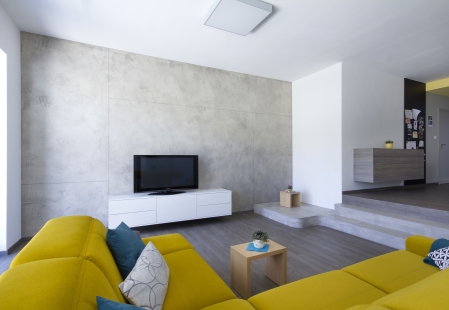
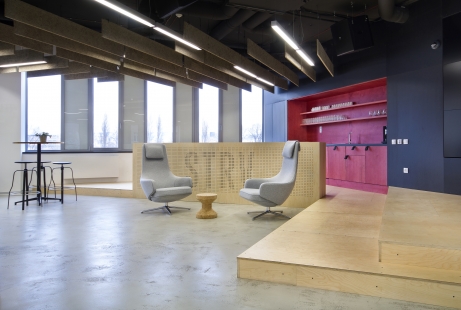
Trowels require experienced hands and a sense for detail – every stroke of the trowel affects the final appearance. Knowledge of technological procedures and adherence to key details, such as dilatation between walls and the floor, are absolutely essential. If these steps are underestimated, the surface may crack or peel over time. A short-term savings in the range of thousands of crowns may later result in damages amounting to tens or hundreds of thousands.Tip: Choose a company with many years of experience that understands the technology, uses quality materials, and has many references.
A concrete trowel can be a beautiful and durable solution – if the type of material is correctly chosen, the substrate is well prepared, and the work is carried out with attention to detail.
The difference between a surface that lasts for years and one that starts to peel soon lies in the quality of materials, expertise, and the experience of the contracting company.

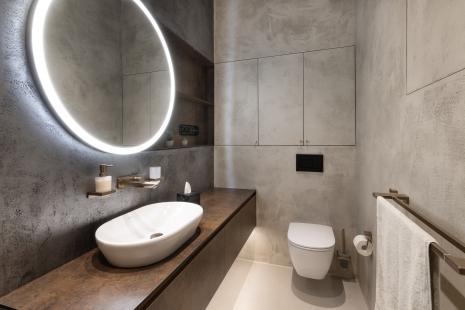
Němec s.r.o. has been dedicated to trowel applications for almost 30 years, has thousands of implementations under its belt, and with its own, well-tested technologies, guarantees quality, design, and a professional approach. It provides a 5-year warranty on implementations and, thanks to post-warranty service, can easily repair even older projects.
Come visit our showroom in Prague or Brno. We will be happy to show you the individual surfaces and help you choose the most suitable solution for your interior.
www.nemec.eu
Photo: archive of Němec s.r.o.
The English translation is powered by AI tool. Switch to Czech to view the original text source.
0 comments
add comment
Related articles
0
15.04.2026 | The magic of contrast: concrete plaster in a wooden cabin
0
06.10.2025 | Wellness like never before: We are pushing the boundaries of the possible
0
17.06.2025 | <!DOCTYPE html>
<html lang="en">
<head>
<meta charset="UTF-8">
<meta name="viewport" content="width=device-width, initial-scale=1.0">
<title>End of Dirty Grout! Spatulas will Make Kitchen Maintenance Easier</title>
</head>
<body>
<h1>End of Dirty Grout! Spatulas will Make Kitchen Maintenance Easier</h1>
</body>
</html>
0
11.04.2025 | Betonepox® after 10 years: What does the floor look like today?
0
12.03.2025 | How to avoid problems with shower squeegees?