
The printer at Výtoň is an important monument of both architectural and guild significance
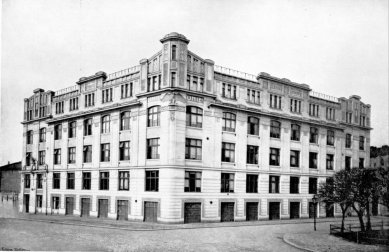
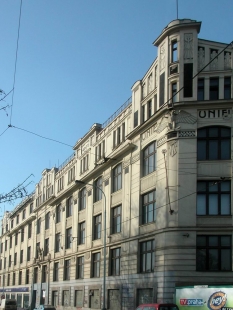
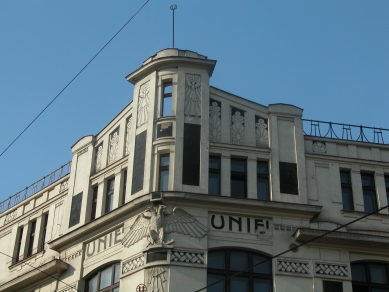
Prague - The printing house in Prague on Výtoni, which caught fire on the night from Monday to Tuesday, is a significant example of industrial architecture from the early 20th century. It also reminds of the cultural-historical role of the Czech Graphic Union, for which the building was constructed and which played an important role in the history of Czech printing. "Although it is not declared a cultural monument, it undoubtedly deserves this status," said art historian Lukáš Beran from the Research Center for Industrial Heritage at the Czech Technical University in Prague.
The building is, however, part of the Prague Monument Reserve, at least its mass and external surfaces belong to the part of the city listed on the UNESCO World Heritage List, and therefore it should not change significantly, said Václav Jandáček from the Club for Old Prague to ČTK.
According to firefighters, the fire at the facility on Svobodova Street in Prague 2 caused damage of approximately 50 million Czech crowns. The fire mainly damaged the equipment, with the structural damage being only in the range of thousands of crowns. In no case is the building damaged to the extent that demolition is threatened. The police have requested expert evaluations. The cause of the fire is still unknown, so all possibilities are being investigated - negligence, technical failure, or intent.
Construction of the complex began in 1898 when the construction of buildings for the graphic factory of the Union started inside an older residential block according to plans by builder František Schlaffer. This was supplemented in 1900 by an annex of retouching studios. Between 1905 and 1906, a glassed-in atrium was added.
"The main building of the printing house from 1906 to 1907 is the first building where load-bearing structures, pillars, and ceilings of production spaces made of reinforced concrete were used to such an extent, resulting in a unique construction organism that expresses the stylistic tendencies of the time and the perfect functionality of the building, including a well-thought-out ventilation system," states Petr Vorlík from VCPD. The building was considered a pinnacle of the combination of architectural perfection and the functionality of internal arrangements at the time.
"It was a source of professional pride for graphic designers, publishers, and printers to operate in a building of great aesthetic value," adds Beran. He was surprised by the incident, as the building is, according to him, "healthy," in good technical condition. That the building is not declared a monument is a pity, according to him. However, he does not share the view that someone would attempt to set the building on fire intentionally. "Usually, such actions are provoked only by the intent to declare a certain object a monument," he believes. The owner may become afraid that they would not be able to reconstruct the monument their way, and thus prefer to get rid of it to acquire the land.
A few years ago, a former brewery in Vinohrady burned down; the cause was allegedly the carelessness of workers. Today, a luxury residential complex stands in its place. According to preservationists and real estate experts, the location of the printing house is also highly lucrative, and the character of the building, that is, an industrial structure, is very suitable for possible reconstruction into anything. Neither firefighters nor heritage protectors believe that the printing house owner would want to intentionally destroy the building.
Heritage protection in the Czech Republic applies to approximately 40,000 properties. However, industrial monuments are only represented by about 2,800 entries, according to Eva Dvořáková from the National Heritage Institute (NPÚ). When the list of monuments was created, it was based on the heritage protection traditions of the late 19th century, and churches, monasteries, castles, and chateaus were the first to be included on the list; technology was just emerging at that time. Folk architecture is relatively well-preserved, often included in broadly protected villages, with approximately 7,000 items of folk architecture.
Technical monuments are still waiting for recognition; if they are not protected, they suffer from inappropriate reconstructions or are at risk of complete destruction. There are only a few entries from the interwar period of industrial architecture, primarily bridge constructions or significant railway buildings, and from the second half of the 20th century, it is only the transmitter on Ještěd, NPÚ spokesperson previously told ČTK.
> VCPD - database of objects: Czech Graphic Union (Printing)
The building is, however, part of the Prague Monument Reserve, at least its mass and external surfaces belong to the part of the city listed on the UNESCO World Heritage List, and therefore it should not change significantly, said Václav Jandáček from the Club for Old Prague to ČTK.
According to firefighters, the fire at the facility on Svobodova Street in Prague 2 caused damage of approximately 50 million Czech crowns. The fire mainly damaged the equipment, with the structural damage being only in the range of thousands of crowns. In no case is the building damaged to the extent that demolition is threatened. The police have requested expert evaluations. The cause of the fire is still unknown, so all possibilities are being investigated - negligence, technical failure, or intent.
Construction of the complex began in 1898 when the construction of buildings for the graphic factory of the Union started inside an older residential block according to plans by builder František Schlaffer. This was supplemented in 1900 by an annex of retouching studios. Between 1905 and 1906, a glassed-in atrium was added.
"The main building of the printing house from 1906 to 1907 is the first building where load-bearing structures, pillars, and ceilings of production spaces made of reinforced concrete were used to such an extent, resulting in a unique construction organism that expresses the stylistic tendencies of the time and the perfect functionality of the building, including a well-thought-out ventilation system," states Petr Vorlík from VCPD. The building was considered a pinnacle of the combination of architectural perfection and the functionality of internal arrangements at the time.
"It was a source of professional pride for graphic designers, publishers, and printers to operate in a building of great aesthetic value," adds Beran. He was surprised by the incident, as the building is, according to him, "healthy," in good technical condition. That the building is not declared a monument is a pity, according to him. However, he does not share the view that someone would attempt to set the building on fire intentionally. "Usually, such actions are provoked only by the intent to declare a certain object a monument," he believes. The owner may become afraid that they would not be able to reconstruct the monument their way, and thus prefer to get rid of it to acquire the land.
A few years ago, a former brewery in Vinohrady burned down; the cause was allegedly the carelessness of workers. Today, a luxury residential complex stands in its place. According to preservationists and real estate experts, the location of the printing house is also highly lucrative, and the character of the building, that is, an industrial structure, is very suitable for possible reconstruction into anything. Neither firefighters nor heritage protectors believe that the printing house owner would want to intentionally destroy the building.
Heritage protection in the Czech Republic applies to approximately 40,000 properties. However, industrial monuments are only represented by about 2,800 entries, according to Eva Dvořáková from the National Heritage Institute (NPÚ). When the list of monuments was created, it was based on the heritage protection traditions of the late 19th century, and churches, monasteries, castles, and chateaus were the first to be included on the list; technology was just emerging at that time. Folk architecture is relatively well-preserved, often included in broadly protected villages, with approximately 7,000 items of folk architecture.
Technical monuments are still waiting for recognition; if they are not protected, they suffer from inappropriate reconstructions or are at risk of complete destruction. There are only a few entries from the interwar period of industrial architecture, primarily bridge constructions or significant railway buildings, and from the second half of the 20th century, it is only the transmitter on Ještěd, NPÚ spokesperson previously told ČTK.
> VCPD - database of objects: Czech Graphic Union (Printing)
The English translation is powered by AI tool. Switch to Czech to view the original text source.
0 comments
add comment