
<Přerov> may impose a sanction on the company for errors made during the demolition of <Komuny>
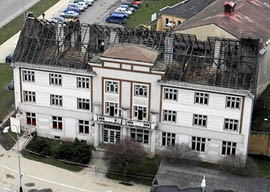 |
The demolition of the house, which is to be replaced by a shopping center, began on February 10. The next day, Přerov officials halted the demolition, stating that the conditions of the demolition permit had not been met. For example, the construction company conducting the demolition did not have confirmation of the disconnection of the building from the gas supply, and the area around the building was not properly enclosed due to construction work.
"In administrative violation proceedings, a fine of up to 200,000 korunas can generally be imposed. The error lies with the builder, meaning the one who is financing the demolition. However, the demolition company should also have adhered to the decision," said Just. He added that the building office could prepare documents for the proceedings in about a month.
The conditions of the demolition permit were met on Friday morning, and a new demolition company hired by the building owner could resume the demolition. Demolition work continues today, and only ruins remain of the building.
The Ministry of Culture revoked the building's heritage protection six months ago, allowing the owner to demolish it. However, recently, the state recognized the revocation of protection as a mistake and sought to protect the building again. Nevertheless, it failed to deliver the relevant decision to the building owner.
To save the monument, it would have sufficed to delay the demolition work until Thursday, when a resolution from the ministry to initiate administrative proceedings, aimed at returning the property back to the list of cultural monuments, would have come into legal force.
The workers' house was constructed in the early 20th century. The building became a center for party life, proletarian physical education, and the cultural, theatrical, and musical components of the party in the Přerov district. It also hosted gatherings attended by leading figures of the Communist Party of Czechoslovakia (KSČ). The building was recorded in the register of immovable cultural monuments as a monument of the labor movement, referencing the activities of the KSČ in 1963. A company from Brno purchased the building from Česká dráha, which had been the owner of the house until that time.
The English translation is powered by AI tool. Switch to Czech to view the original text source.

0 comments
add comment