
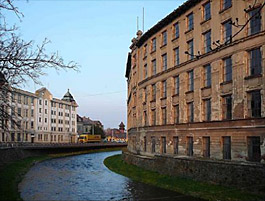
Krnova will start this year transforming the former textile factory into a museum
 |
The study, which is being finalized by the Brno architectural studio RAW and the interior studio ULMA, will be decided upon by the Krnov representatives in February. According to the city council, the option of the study that minimizes demolition within the industrial complex is more favorable. "The public will also be able to get acquainted with the study on information panels and during discussions," Círová added.
Another step this year will be the repair of the roof of the former spinning mill, which is leaking. To save the 1900 building, the city will need 4.5 million crowns. The European Union will contribute nearly four million crowns for it within the operational program of cross-border cooperation with Poland.
The building of the spinning mill houses a historically valuable sample room, where seasonal fabric patterns were designed in the company Alois Larisch and Sons for woolen goods. The so-called dezinatura preserved the original equipment - such as a winding machine, hand looms, or a collection of fabric samples; the oldest dates back to the 1870s.
The sample room will in the future become the basis of the museum section, which will present the history of textile production across Silesia. "Functional machines and the authenticity of the workshop will make it engaging to present the history of Krnov's textile factories. Visitors will also be able to try out simple work procedures," added mayor Renata Ramazanová.
In the monument-protected buildings that housed the management of Karnola before its bankruptcy, a museum of organ-making tradition and a regional museum, which the city still lacks, will also be established. The city shares the former industrial complex, which extends along both banks of the Opava River, with the Bruntál state district archive. The former production buildings owned by the archive are gradually being reconstructed.
The former management building of the company was purchased by the city two years ago from the bankruptcy administrator for 3.8 million crowns. Karnola went bankrupt at the beginning of 2001 when a court declared it bankrupt. The indebted and loss-making company faced bankruptcy as early as spring 1999 after losing significant customers due to the financial crisis in Russia a year earlier.
The English translation is powered by AI tool. Switch to Czech to view the original text source.
0 comments
add comment