
In New York, a rarity is presented: Czech architectural cubism
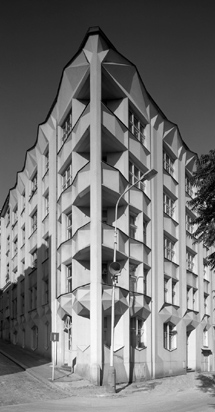 |
"Perhaps the exhibition is so successful because it showcases one of the epochs when Czech architects could speak to world architecture and create something entirely original, even though cubism was not particularly successful," said architecture historian Zdeněk Lukeš to ČTK during the opening at the Czech National Building in Manhattan.
Cubist buildings were created in just four years, between 1911 and 1914. This exceptional style, considered entirely crazy and impractical at the time, had lingering effects even after World War I, but it ended up as a dead end in architectural development. Today, it is seen as a rarity, attracting architecture lovers from all over the world to the Czech Republic.
Among the most famous cubist buildings are the House at the Black Madonna in Prague by architect Josef Gočár, four houses in Prague's Vyšehrad from the studio of Josef Chochol, the Diamond House on the corner of Spálená and Lazarská streets in Prague by architect Emil Králíček, as well as Gočár's spa building in Bohdaneč and villas in Jičín and Pelhřimov, built by the father of Czech architectural cubism, Pavel Janák.
According to New York art historian, great-granddaughter of the first Czechoslovak president Tomáš Garrigue Masaryk, Charlotta Kotíková, the exhibition can show the American public “an absolutely unique moment in architectural history.” She was very intrigued that at the opening and lecture by Zdeněk Lukeš, the American audience outnumbered the Czech expatriates. “I know that it will spread further; many people will come to see the exhibition, thus educating themselves about Czech culture. Americans are very curious, positive, and eager to learn,” she told ČTK.
The exhibition, which will move from New York to Helsinki, Tokyo, and Madrid, captures architectural works in black-and-white photographs by Ester Havlová. The exhibition also features plans and sketches of buildings, designs of cubist furniture, and replicas of Czech cubist porcelain from the workshop of Pavel Janák. It will be open at the Czech Center gallery in the national building until mid-March.
The English translation is powered by AI tool. Switch to Czech to view the original text source.

0 comments
add comment