
Náprstek Museum exhibits photographs of Mayan and Incan structures
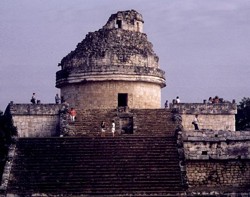 |
Through more than 100 color photographs, all interested parties will have the opportunity to view the most famous ancient centers built from the classical period to the Spanish conquest in broad views and in details - such as Palenque, Copán, Chichén Itzá, and Uxmal in Mexico, Tikal in Guatemala, and Chanchan, Nazca, Machu Picchu, Pisac, Cuzco, and others in Peru.
However, in addition to the rich overview of Indian history, the exhibition also allows viewers to encounter the contemporary indigenous reality of these countries. In contrast to the beauty of the architectural monuments, there are lively markets and the colorful life of contemporary Mayan, Aymara, and Quechua villagers. The exhibition will last until October 1.
Edgar Knobloch graduated from the Faculty of Law at Charles University in 1950. He also studied Arabic and the history of the Middle East at the university, and while studying, he focused on the theme of the Islamic East, history, and archaeology. He is the author of works such as the novel The Death of Tamerlane and travelogues In the Heart of Asia and The Art of Central Asia.
He had his first photo exhibition at the Náprstek Museum in 1960, emigrated five years later, is now a British citizen, and lives with his wife in France. In 1996, he had an exhibition at the museum titled Islamic Architecture, and two years later, he presented under the title Lands of the Orient eighty images of Islamic architecture, monuments, natural wealth, and people. This exhibition, which was the result of more than thirty years of work, was collaborated on with his wife.
More about the exhibition>
The English translation is powered by AI tool. Switch to Czech to view the original text source.
0 comments
add comment