
There is an exhibition about Biedermeier starting at Prague Castle
 |
The showcase of more than seven hundred exhibits concentrated in one space is, according to the head of the culture department of the Prague Castle Administration, Kateřina Horníčková, the largest exhibition held at the Castle since 1989.
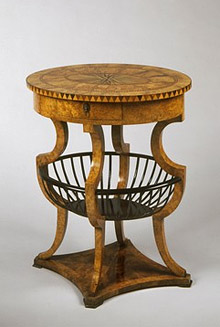
Biedermeier built upon the classicist ideal of "noble simplicity," and spread from the wealthiest layers - aristocracy and prosperous bourgeoisie - gradually into the whole society. The exhibition shows a variety of types of glass and porcelain, samples of graphics, paintings, period clothing, carpets, and, for example, designs for room painting. A large part of the exhibition consists of furniture, such as upholstered chairs, sofas, and secretaries. An interesting exhibit is a giraffe piano made of polished mahogany.
"We want to show the Czech audience the first half of the 19th century, which meant something in artistic and visual creation. The simplicity of Biedermeier is only superficial; these are often complexly constructed items bearing immense amounts of artistic mastery," said the director of the Museum of Decorative Arts, Helena Koenigsmarková. The upholstered furniture was largely restored based on contemporary records, using current French pattern books, she added.
Biedermeier favored practical and simple forms thanks to the newly emerging civil society in the period of peace after the Napoleonic Wars, which sought harmony between beauty and function. "We show that its beginnings are also connected with high society and Prague Castle, which has an extensive Biedermeier collection from this period," said the curator of the exhibition Radim Vondráček.
With its pragmatism, this style differed from the ostentatious Empire and emotional Romanticism. It sought inspiration in everyday life, commonness, and naturalness. An impressive aesthetic element became the beauty of the material, which is manifested, for example, in the veneering of wood or the use of colored glass.
The English translation is powered by AI tool. Switch to Czech to view the original text source.
0 comments
add comment