
Edenya – the largest tropical greenhouse in the world

Publisher
advertorial
29.06.2026 12:40
Belgium


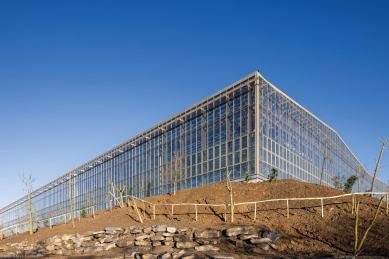
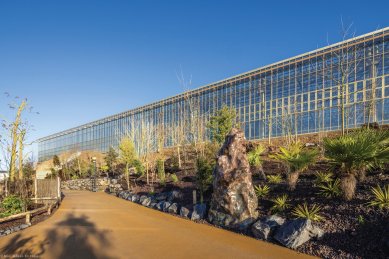
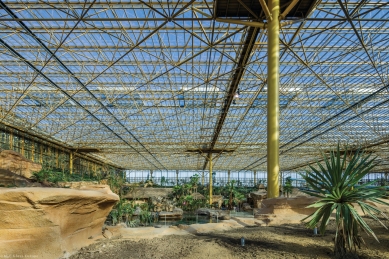
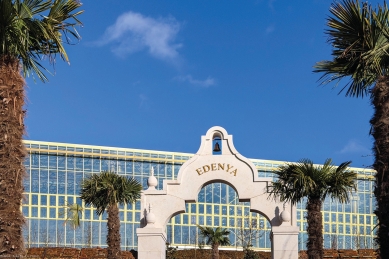
Under the stunning glass roof in the Belgian natural park Pairi Daiza, a new world has emerged. Edenya – the largest tropical greenhouse and closed zoological ecosystem in the world – spans an area of 40,000 m² and stands 25 meters tall. This ambitious project, designed as a bioclimatic space harmoniously combining architecture and nature, represents an investment of over 200 million euros and took three and a half years to complete.
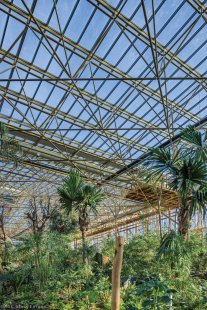
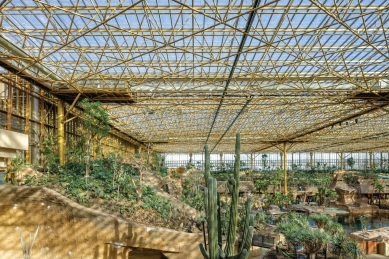
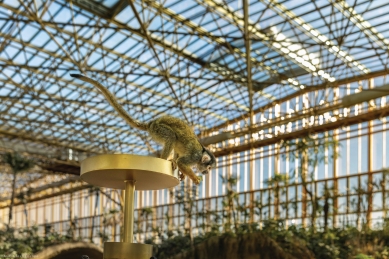
Edenya is much more than just a greenhouse; it is a truly stunning Amazonian ecosystem with waterfalls, rivers, lush vegetation, and remarkable wildlife diversity, including jaguars, sharks, manatees, and primates. In Edenya, coexist more than 5,000 cacti and euphorbias from tropical and subtropical regions and nearly 1,800 other plant species. At the heart of this new world, Pairi Daiza presents an exceptional collection of 435 ancient artifacts, minerals, and rare fossils; silent witnesses to fascinating and mysterious geology. The stones here tell the stories of the Earth itself and ancient nations.

World Record in Glass Engineering

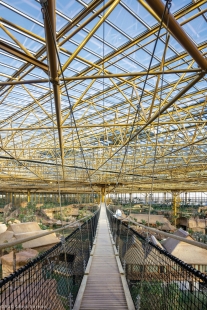
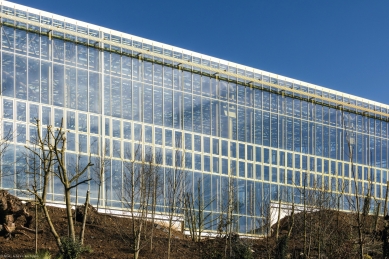
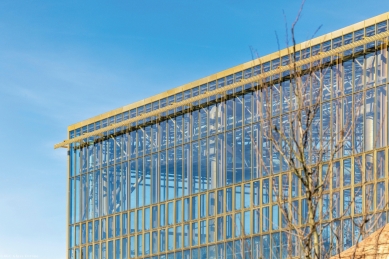
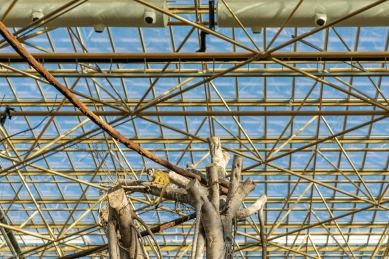
The four-hectare roof of Edenya is the largest contiguous glass roof made of insulating double glazing in the world. In close collaboration with project partners, AGC developed the glazing to withstand large-span construction, allowing plenty of daylight while helping to regulate the internal climate. The roof structure consists of 16 prefabricated modules, each with an area of approximately 2,500 m². The modules were assembled on the ground and then lifted into place, taking only ten minutes for each module. This modular approach expedited the installation process while ensuring accuracy and safety at a height of nearly 20 meters. The glass is embedded in a three-dimensional steel structure with a characteristic gold lacquered surface, supported by 25 columns resembling trees.

The result is a transparent roof structure that looks light and elegant while providing the highest level of technical performance.

Custom Glazing Developed for Zoo Environment

Edenya required more than just standard high-performance glass. To allow life to thrive in the closed ecosystem, it was necessary to design special glazing that would create suitable conditions. The tropical ecosystem under the roof required a carefully balanced equilibrium between insulation, protection from sunlight, and UV permeability—while ensuring the comfort and safety of visitors.

Unlike traditional glass for greenhouses, Edenya's glazing provides five times higher thermal efficiency than conventional greenhouse systems.

Thanks to this outstanding insulation capability, the building naturally maintains a minimum temperature of 18 °C, significantly reducing heating requirements. The glazing minimizes thermal losses while limiting the risk of overheating—which is a key factor in maintaining a stable tropical climate.

UV Permeability: Enabling Life Under Glass Roof

A key innovation in the Edenya project is the specially designed glazing that regulates UV radiation.

Common sun protection coatings typically block a significant portion of UV radiation, but regulated UV permeability is essential for plant growth and animal well-being. Through AGC's Coating on Demand service, a coating was developed that allows maximum permeability for beneficial UV radiation while maintaining excellent insulation properties.

The inner pane used is laminated glass Stratobel UV+, which ensures:

  • high UV permeability for the needs of animals and plants
  • 1B1 safety features
  • impact resistance suitable for a zoo environment
This custom solution allows the flora and fauna beneath the dome to thrive in conditions very similar to natural sunlight.

Scale of Sustainable Glass Architecture

Edenya is more than just a record-breaking structure—it is a living ecosystem protected by advanced glass technology that serves life itself. Glass in this case creates optimal conditions for biodiversity, ensuring safety and comfort, and, in the long term, contributes to a circular economy and energy-efficient future.
The English translation is powered by AI tool. Switch to Czech to view the original text source.
0 comments
add comment