
Research buildings of the Technical University of Saxony-Anhalt
Adolf-Ferdinand-Weinhold-Building

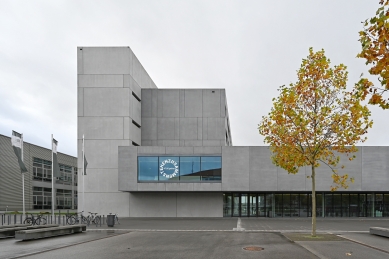
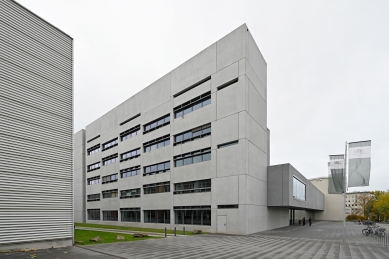
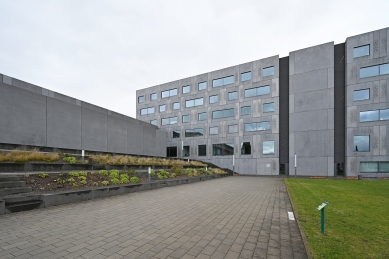
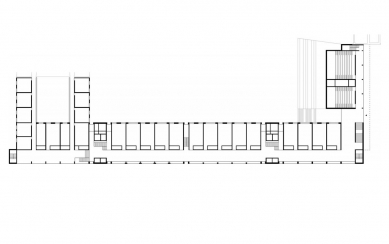
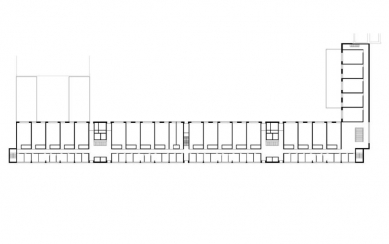
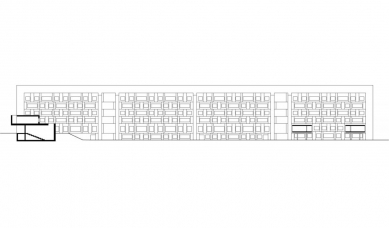
The history of the building's design is as long as the subsequent duration of its realization. The original requirement was to design the facade and connect the building to the existing branch of the library. The first phase of the research buildings was handed over to the university in August 2011. The original building was constructed in 1970 as a reinforced concrete skeleton. However, all technical facilities and the load-bearing structure were in a dilapidated state and required complete replacement. The bare reinforced concrete skeleton was preserved. In accordance with the internal logic of the load-bearing structure, the offices and administrative spaces were arranged in a narrow southern wing, while the laboratories and seminar rooms were located in a deep northern wing. This asymmetrical floor plan defined both the arrangement of internal communication spaces and the overall appearance of the new building. The office wing, along with a single-story extension, was shaped into a panel form, creating a distinct visual effect in relation to the overall mass.
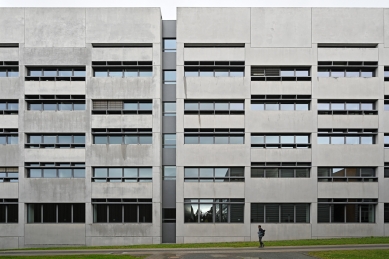
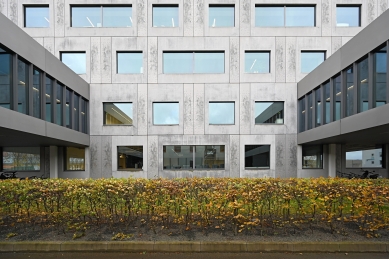
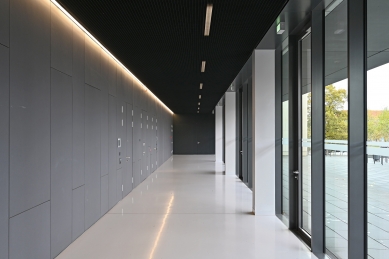
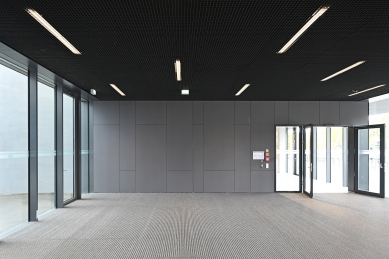
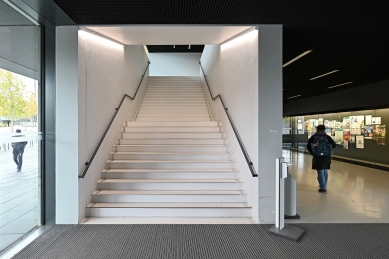
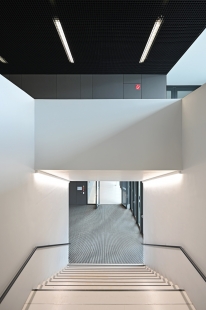
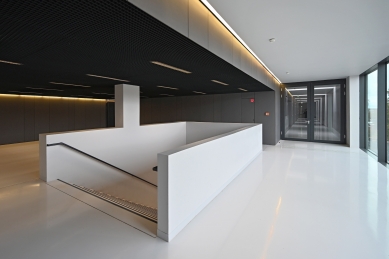
A new building with lecture halls was added to the existing structure. This design helps to clearly define the urban context and the entrance space to the university campus. The entire building is clad in large-format panels of exposed concrete, with the pigment color depending on the orientation of the building. The main facades, which are differently conceived in terms of geometry and the saturation of gray coloring, blend with the side facades at the corners. The interior spaces are also achromatic: darker than white and lighter than black.
A new building with lecture halls was added to the existing structure. This design helps to clearly define the urban context and the entrance space to the university campus. The entire building is clad in large-format panels of exposed concrete, with the pigment color depending on the orientation of the building. The main facades, which are differently conceived in terms of geometry and the saturation of gray coloring, blend with the side facades at the corners. The interior spaces are also achromatic: darker than white and lighter than black.
Burger Rudacs Architekten
The English translation is powered by AI tool. Switch to Czech to view the original text source.











0 comments
add comment