
Villa Sarra

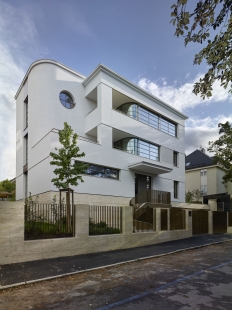
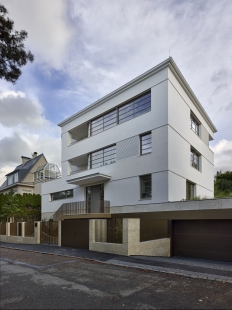
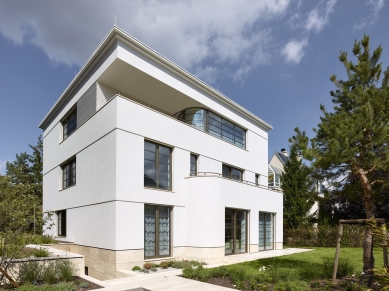
The new villa construction sensitively connects to the character of the stabilized villa neighborhood in Prague 6, both in its scale and overall architectural expression. The building was designed on the site of the original family house, which was in poor technical condition and its layout no longer met contemporary housing requirements.
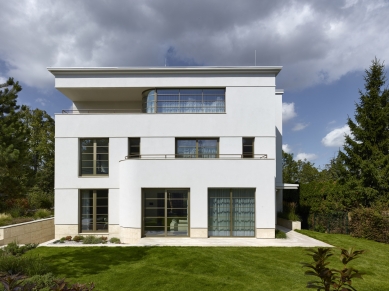
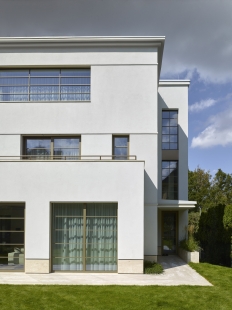
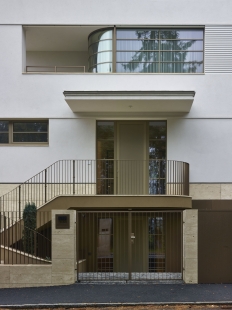
The architectural solution of the house draws inspiration from the tradition of functionalist villas in Prague 6. The cubic volume of the flat-roofed building is lightened by the pronounced horizontality of the roof planes, generous glazed surfaces, and the spatial shaping of the loggias. The division of mass is not arbitrary—it is based on the internal organization of the house, responds to the orientation towards the cardinal directions, and maximally utilizes views of the surroundings.
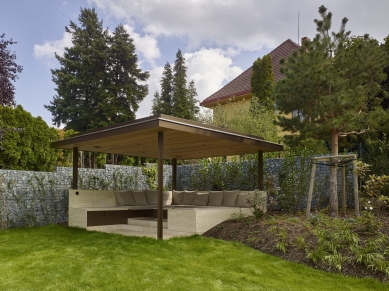
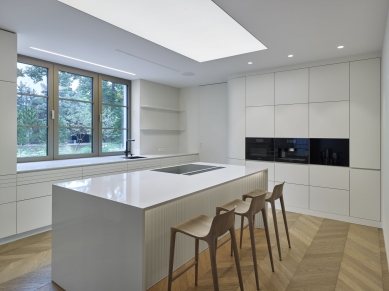
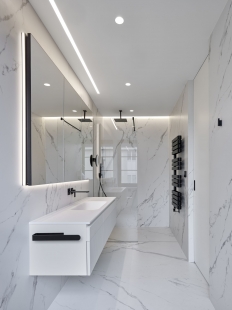
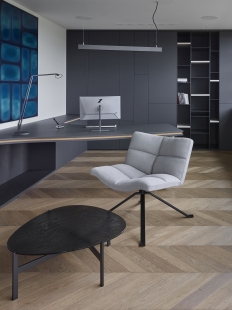
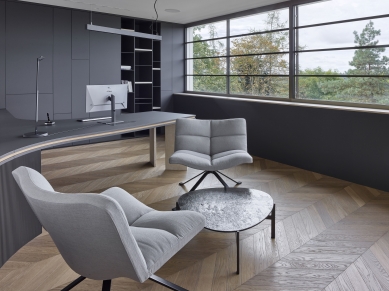
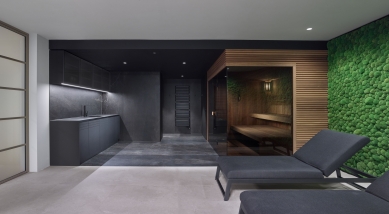
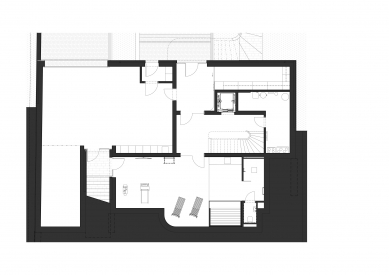
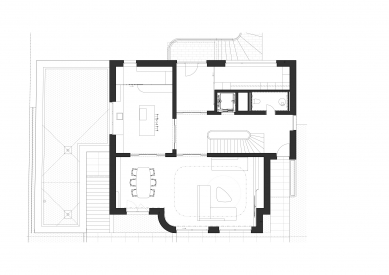
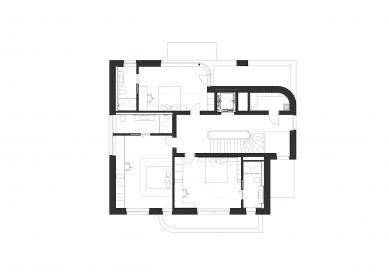
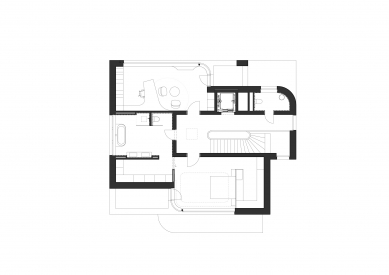
The layout is designed to be generous and clear with an emphasis on user comfort. In the basement, there is the entrance to the house, a spacious garage, wellness facilities, and technical support, with both the wellness area and garage having direct connections to the garden. The ground floor is dedicated to the main living area of the house—kitchen, dining room, and living room—which are in close contact with the garden and create a seamless connection between the interior and exterior. The second floor is designated for children's rooms and a guest room, each with its own bathroom. The top floor is reserved for the private zone of the parents, featuring a bedroom, dressing rooms, and a bathroom. This floor also includes a study with a view of the Šárecké Valley. All floors are connected by a generous stair hall and an elevator that ensures full barrier-free access to the house.
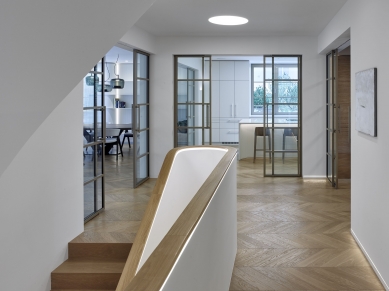
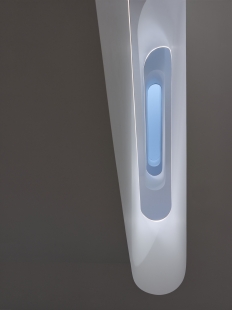
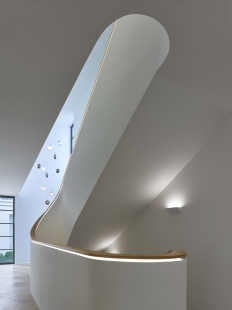
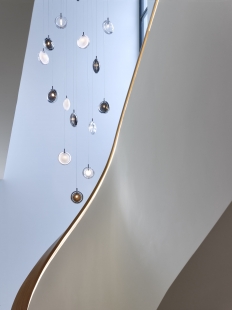
The interior design of the villa is based on respect for the architectural concept of the building and its functionalist legacy. The fundamental principle of the design became working with clean lines, proportion, and material restraint, which together create a timeless and cultivated living space. The dominant element of the interior is the stair hall, which becomes the natural heart of the house and connects all floors into one fluid whole. The organically shaped staircase railing combined with a prominent pendant light emphasizes the verticality of the space and adds dynamism and lightness to the interior. The stair hall also serves as a reference point for the house, creating a visual and functional connection between the various living zones.
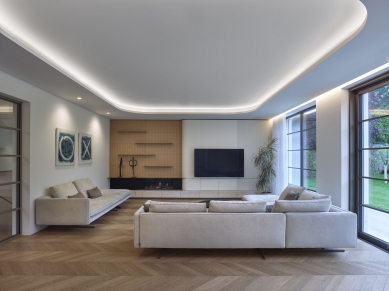
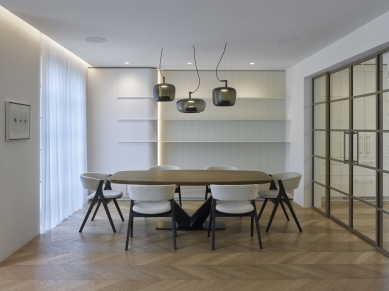
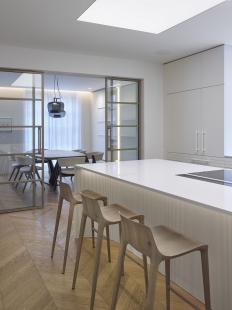
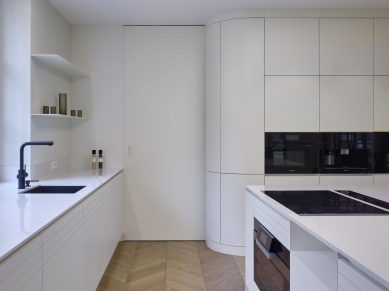
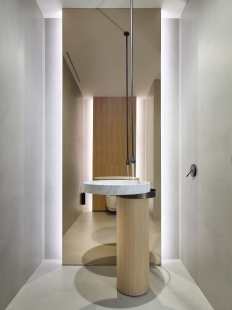
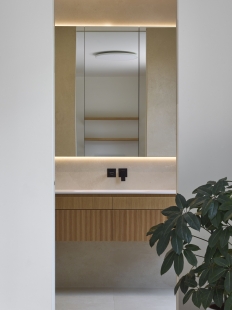
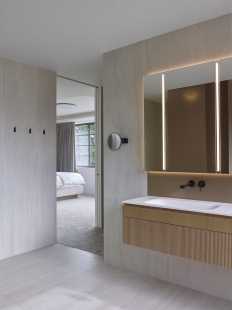
The material solution of the interior refers to the tradition of functionalist interiors, but in a contemporary interpretation. The wooden floor brings natural warmth to the space and contrasts with the finely structured white surfaces. A characteristic element is the horizontal division of the glazed doors, which refers to historical morphology but is designed in a contemporary execution. The carpentry elements were designed in a combination of white color and wooden veneer, allowing for the visual purity of the interior while emphasizing its mass and material structure. In the representative areas of the house, especially in the entrance space and the living room, travertine cladding is used, which adds nobility and natural elegance to the interior.
The architectural solution of the house draws inspiration from the tradition of functionalist villas in Prague 6. The cubic volume of the flat-roofed building is lightened by the pronounced horizontality of the roof planes, generous glazed surfaces, and the spatial shaping of the loggias. The division of mass is not arbitrary—it is based on the internal organization of the house, responds to the orientation towards the cardinal directions, and maximally utilizes views of the surroundings.
The layout is designed to be generous and clear with an emphasis on user comfort. In the basement, there is the entrance to the house, a spacious garage, wellness facilities, and technical support, with both the wellness area and garage having direct connections to the garden. The ground floor is dedicated to the main living area of the house—kitchen, dining room, and living room—which are in close contact with the garden and create a seamless connection between the interior and exterior. The second floor is designated for children's rooms and a guest room, each with its own bathroom. The top floor is reserved for the private zone of the parents, featuring a bedroom, dressing rooms, and a bathroom. This floor also includes a study with a view of the Šárecké Valley. All floors are connected by a generous stair hall and an elevator that ensures full barrier-free access to the house.
The interior design of the villa is based on respect for the architectural concept of the building and its functionalist legacy. The fundamental principle of the design became working with clean lines, proportion, and material restraint, which together create a timeless and cultivated living space. The dominant element of the interior is the stair hall, which becomes the natural heart of the house and connects all floors into one fluid whole. The organically shaped staircase railing combined with a prominent pendant light emphasizes the verticality of the space and adds dynamism and lightness to the interior. The stair hall also serves as a reference point for the house, creating a visual and functional connection between the various living zones.
The material solution of the interior refers to the tradition of functionalist interiors, but in a contemporary interpretation. The wooden floor brings natural warmth to the space and contrasts with the finely structured white surfaces. A characteristic element is the horizontal division of the glazed doors, which refers to historical morphology but is designed in a contemporary execution. The carpentry elements were designed in a combination of white color and wooden veneer, allowing for the visual purity of the interior while emphasizing its mass and material structure. In the representative areas of the house, especially in the entrance space and the living room, travertine cladding is used, which adds nobility and natural elegance to the interior.
The English translation is powered by AI tool. Switch to Czech to view the original text source.


2 comments
add comment
Subject
Author
Date
funkcionalizmus stále žije
29.01.26 12:14
Konecne moderni a soucasne dobra architektura.
Jan
14.05.26 03:39
show all comments