
Lama Tower

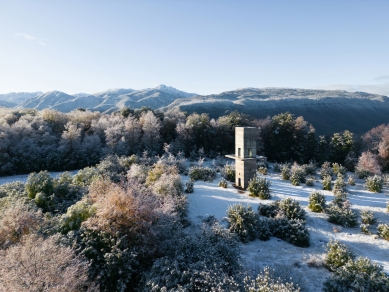
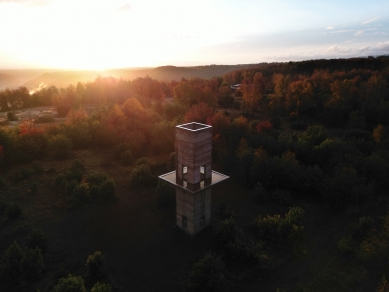
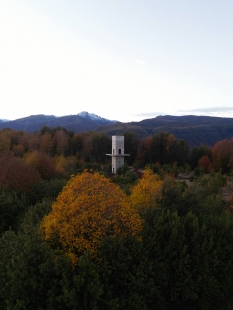
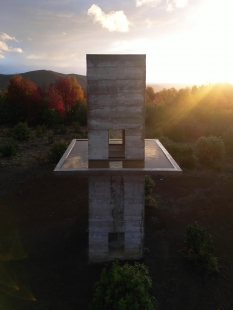
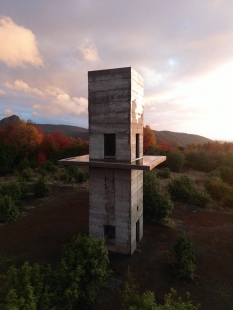
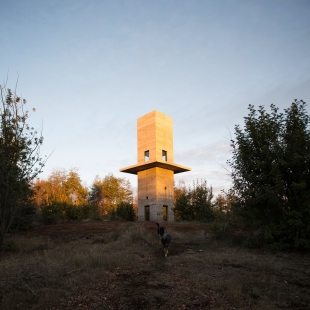
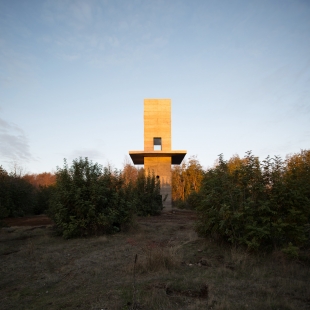
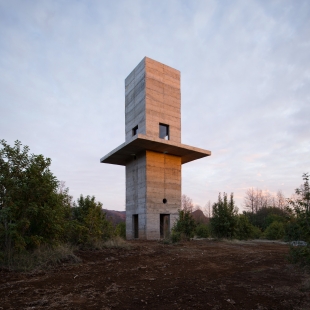
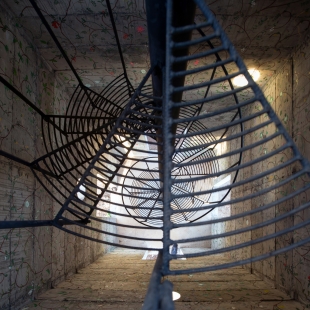
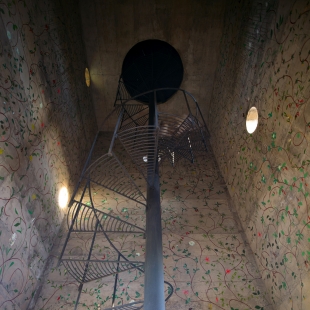
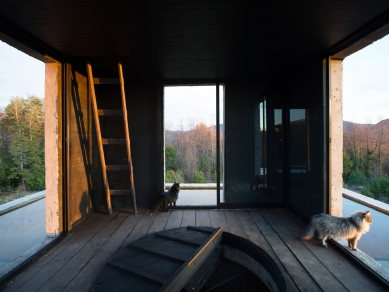
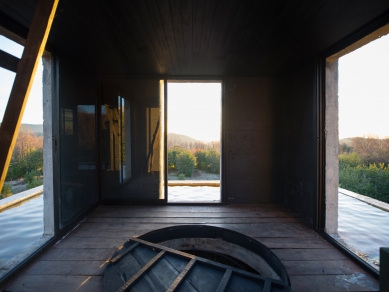
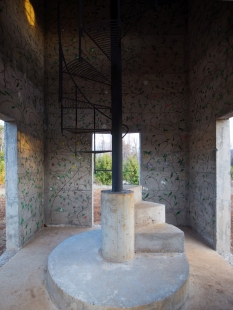
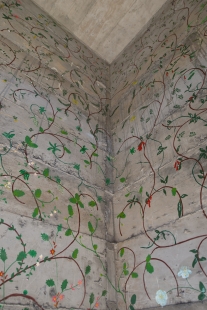
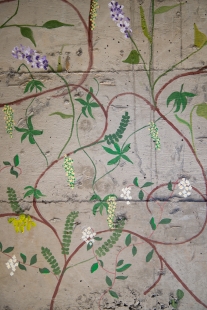
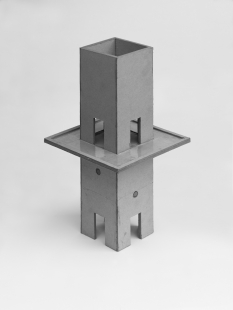
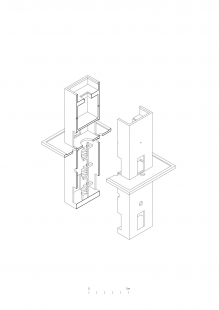
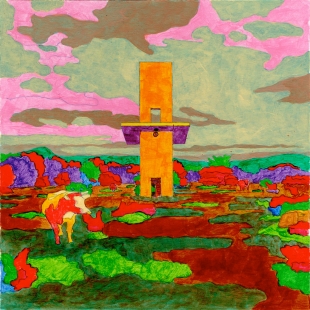
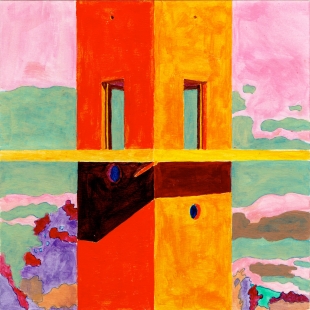
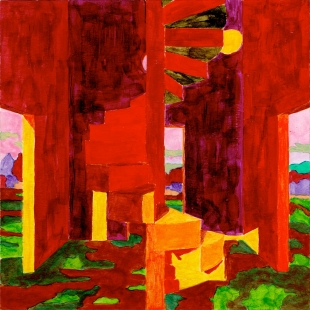
The solitary figure works as a landmark and a lookout (and look-in) place. With a vertical succession of rooms, it was built to look at the Andes Mountains, hidden amongst old native trees. Its format is that of a slender volume formed by two stacked towers, each half the total height. The lower one has an eave that duplicates the size of its roof, the upper one has a terrace that duplicates the footprint of its floor. Floor and roof become a horizontal plate that sits halfway the elevation, a thin plane cantilevered in every cardinal direction, has a difficult function: it holds a shallow pond of rain water, thus, it turns the slab both into a mirror that reflects the upper section of the tower, the sky and the surrounding trees, and also into a fictional glass, a transparency, that suggests the presence of the lower tower. Even more difficult than that, like a permanent cloud, the plate casts a deep solid shadow over the lower tower, eventually with rain falling all around by the overflow of the little pond. Ironically, inside the tower, its lookout function is reversed. Instead of framing the sublime panorama, tempering its imposing presence, the access to the suspended platform follows a spiral staircase that pivots around a continuous outdoor mural of vines, both living and painted, depicting a selection of thirty native flowers as if connected into the same tree. After the platform, a feeble wood ladder allows access to a black room with four peepholes, a kind of devious camera obscura, which then leads to an open, overexposed rooftop with a fire pit that, at the right distance, might turn the entire tower into an outdated chimney.
Pezo von Ellrichshausen






0 comments
add comment