
Reconstruction and interior of the wine house Sklenářka

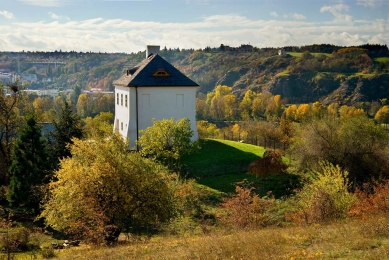
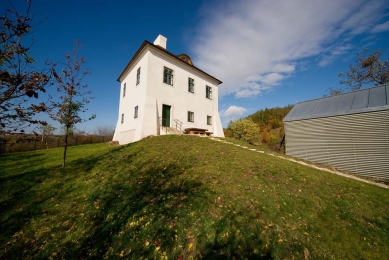
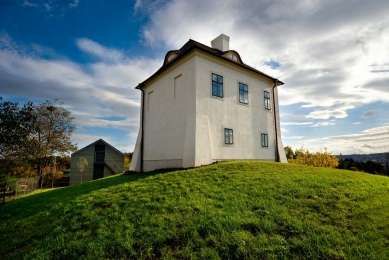
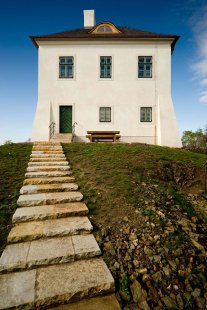
Baroque structure, a vineyard estate known as Sklenářka, probably dates back to the first half of the 17th century. It is a tower-like building with reinforced corner buttresses that evokes the impression of a fortress. The building's position at the top of a hill above a bend in the Vltava River is also dominant and exceptional. The property is listed in the Operational Register of immovable cultural monuments of the capital city of Prague.
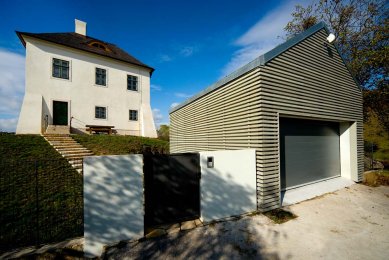
After losing its original function, the estate fell into disrepair for many years until a massive reconstruction in 1989-90, which saved the building from total destruction, but led to a degradation of its heritage value. Almost no authentic architectural elements have been preserved. Historically valuable are the original massive perimeter walls of the building and the preserved ceiling beams with period restoration interventions. The adjacent garage building, which was required to be preserved, also originates from the time of reconstruction.
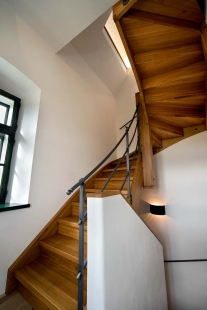
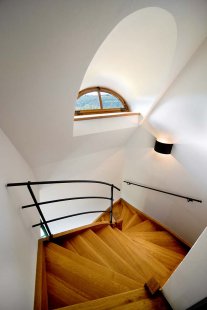
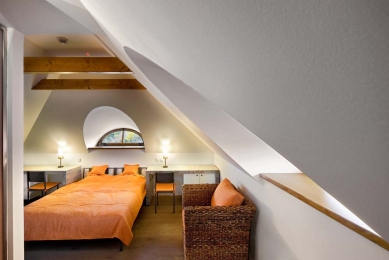
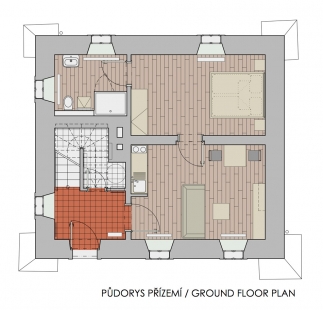
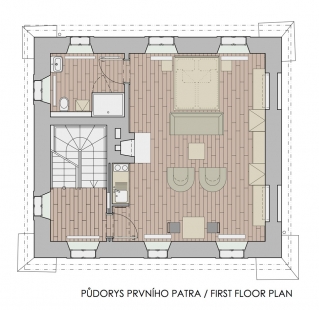
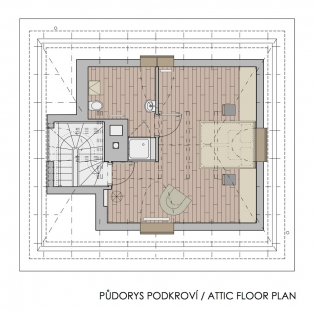
The goal of the reconstruction was to create accommodation for guests of the zoo with maximum variability. Thus, two apartments were created on the ground floor and the first floor, complemented by an attic room with amenities. Each apartment is equipped with a bathroom and a kitchenette. The individual floors are connected by a new internal staircase.
The aim of the reconstruction was to restore the authenticity of the building by using adequate architectural elements, original materials, and surfaces, all in the spirit of Baroque construction. Emphasis was placed on the craftsmanship of individual elements, such as period casement windows on the façade, a replica of massive Baroque doors, or blacksmith-crafted fittings.
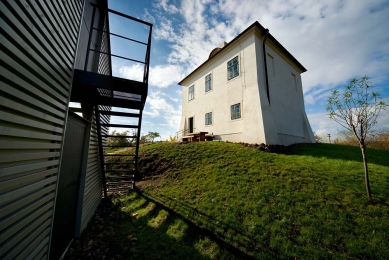
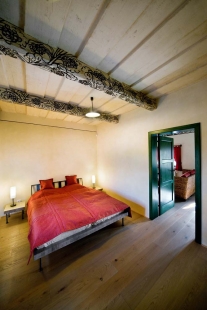
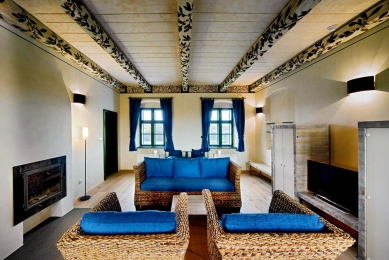
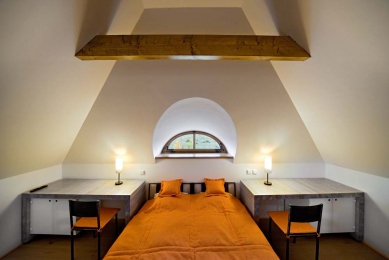
Simultaneously, a massive removal of non-original internal structures occurred, and an entirely new layout was built. A new chimney with a conically expanded head was constructed. A completely new roof including the truss was made. The roofing is made of split shingles. The lighting of the attic is provided by four new roof dormers in the shape of ox-eye windows. Special attention was paid to the restoration of the beam ceilings. The original ceiling beams have only aesthetic function after the previous reconstruction but have been restored and complemented with new plank sheathing on both floors. Lime plaster with a smoother finish is applied around the windows, complemented by darker shades of jambs. Together with the green glaze of the openings and blacksmith's finish, they create the characteristic coloration of the building.
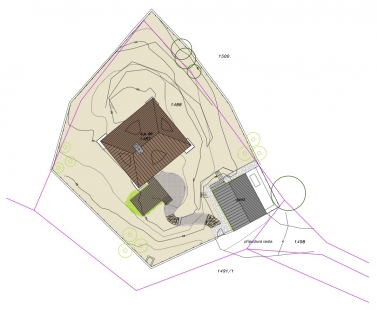
The adjacent modern garage building was intentionally differentiated from the historic building by using simplified forms and modern materials. New technical equipment fixtures were part of the reconstruction. To achieve energy savings, a new ecological heating system with a heat pump located in the garage building was installed.
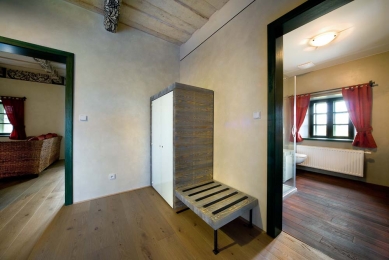
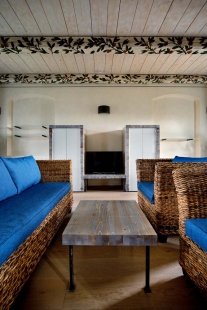
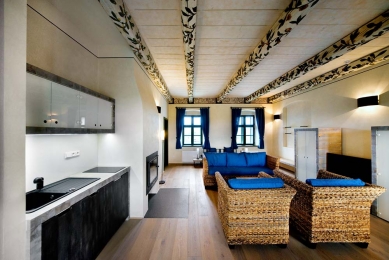
The interior design concept builds on the overall design of the building's reconstruction, where historical architectural elements and materials intertwine with new ones. The interior is designed strictly from traditional natural materials, but the spatial form of individual pieces, their processing, and surface treatment are purely contemporary. The shaping of the furniture was guided by the desire for maximum simplicity, enhancing the effect of the material itself and quality craftsmanship. Simple shaping achieves a certain timelessness. The design of individual pieces will not compete with the space itself and the building's architectural elements. The overall effect of the interior should seem light due to the light gray-white tones and the gentle pattern of natural wood. White glass and the blacksmith finish of natural iron create striking material contrast surfaces. Colorful textile accessories will soften and cozy up the simple effect of the space.
Individual pieces of furniture are designed from slabs of cut solid wood with enhanced growth rings and gray-white glaze in combination with forged iron accents, which consist of simply-shaped square rods and sheets treated with a natural gray patina. The doors of the cupboard and kitchen units will be made of white clear tinted glass. The purely metal furniture includes chairs and a standing coat rack. These shapes are maximally simple in terms of design and construction, made from hollow profiles with spot-welded sheets. The surface is treated with a blacksmith's natural gray patina. The rattan seating furniture is from a serial manufacturer. The lighting fixtures are either made of white glass or natural sheet metal with a rusty patina. An integral part is the textile accessories in pastel colors.
After losing its original function, the estate fell into disrepair for many years until a massive reconstruction in 1989-90, which saved the building from total destruction, but led to a degradation of its heritage value. Almost no authentic architectural elements have been preserved. Historically valuable are the original massive perimeter walls of the building and the preserved ceiling beams with period restoration interventions. The adjacent garage building, which was required to be preserved, also originates from the time of reconstruction.
The goal of the reconstruction was to create accommodation for guests of the zoo with maximum variability. Thus, two apartments were created on the ground floor and the first floor, complemented by an attic room with amenities. Each apartment is equipped with a bathroom and a kitchenette. The individual floors are connected by a new internal staircase.
The aim of the reconstruction was to restore the authenticity of the building by using adequate architectural elements, original materials, and surfaces, all in the spirit of Baroque construction. Emphasis was placed on the craftsmanship of individual elements, such as period casement windows on the façade, a replica of massive Baroque doors, or blacksmith-crafted fittings.
Simultaneously, a massive removal of non-original internal structures occurred, and an entirely new layout was built. A new chimney with a conically expanded head was constructed. A completely new roof including the truss was made. The roofing is made of split shingles. The lighting of the attic is provided by four new roof dormers in the shape of ox-eye windows. Special attention was paid to the restoration of the beam ceilings. The original ceiling beams have only aesthetic function after the previous reconstruction but have been restored and complemented with new plank sheathing on both floors. Lime plaster with a smoother finish is applied around the windows, complemented by darker shades of jambs. Together with the green glaze of the openings and blacksmith's finish, they create the characteristic coloration of the building.
The adjacent modern garage building was intentionally differentiated from the historic building by using simplified forms and modern materials. New technical equipment fixtures were part of the reconstruction. To achieve energy savings, a new ecological heating system with a heat pump located in the garage building was installed.
The interior design concept builds on the overall design of the building's reconstruction, where historical architectural elements and materials intertwine with new ones. The interior is designed strictly from traditional natural materials, but the spatial form of individual pieces, their processing, and surface treatment are purely contemporary. The shaping of the furniture was guided by the desire for maximum simplicity, enhancing the effect of the material itself and quality craftsmanship. Simple shaping achieves a certain timelessness. The design of individual pieces will not compete with the space itself and the building's architectural elements. The overall effect of the interior should seem light due to the light gray-white tones and the gentle pattern of natural wood. White glass and the blacksmith finish of natural iron create striking material contrast surfaces. Colorful textile accessories will soften and cozy up the simple effect of the space.
Individual pieces of furniture are designed from slabs of cut solid wood with enhanced growth rings and gray-white glaze in combination with forged iron accents, which consist of simply-shaped square rods and sheets treated with a natural gray patina. The doors of the cupboard and kitchen units will be made of white clear tinted glass. The purely metal furniture includes chairs and a standing coat rack. These shapes are maximally simple in terms of design and construction, made from hollow profiles with spot-welded sheets. The surface is treated with a blacksmith's natural gray patina. The rattan seating furniture is from a serial manufacturer. The lighting fixtures are either made of white glass or natural sheet metal with a rusty patina. An integral part is the textile accessories in pastel colors.
DESIGN arcom, s.r.o.
The English translation is powered by AI tool. Switch to Czech to view the original text source.




10 comments
add comment
Subject
Author
Date
autor?
lumír
12.08.14 10:18
zdařilá rekonstrukce
Janka
12.08.14 12:29
re autor
Jan Brejcha
12.08.14 12:20
Stav domu před zásahem:
Petr Šmídek
12.08.14 01:56
paradni-skoda te garaze
pavlik.t
12.08.14 03:37
show all comments