
Pradiaren Kezmarok
1st phase

Reviving Industrial Heritage Beneath the Tatras
The former spinning mill complex in Kežmarok, founded in 1860 by Karol Wein, once stood among the most advanced factories in the Austro-Hungarian Empire. At a time when textile production flourished in the foothills of the High Tatras, it represented a significant industrial enterprise. Production continued uninterrupted until 1946, when the original owners were forced to leave the country. Later, the factory operated under the name Tatraľan—a mechanical flax spinning and weaving mill employing up to 2,500 workers.
Following the economic transition in former Czechoslovakia after 1989, production ceased. Despite decades of decline, the complex endured, and its architectural value was officially recognized when the main production building was declared a National Cultural Monument.
When the site passed into the hands of its current investor, it was in a state of serious disrepair. A stream runs directly beneath the building, and parts of its structure rest on wooden piles that had begun to decay. Moisture and repeated water infiltration had damaged the masonry, floors, and ceilings—making extensive structural and conservation work indispensable.
Architectural Concept and Relationship to the City
In 2019, the new owner launched an architectural competition with the goal of creating a contemporary production and administrative facility for a renowned spirits manufacturer—seamlessly integrated into the historic structure. Our winning proposal emphasized the connection between the site’s industrial heritage and its new architectural and functional layer, opening the complex to the public once again.
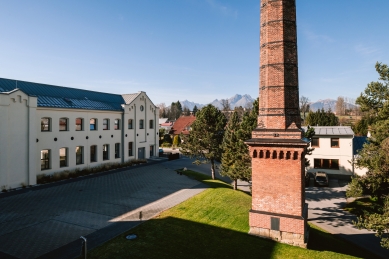
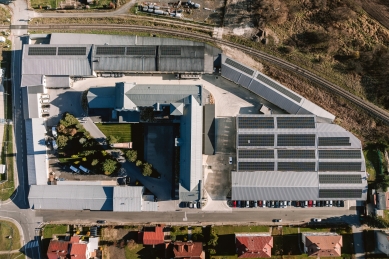
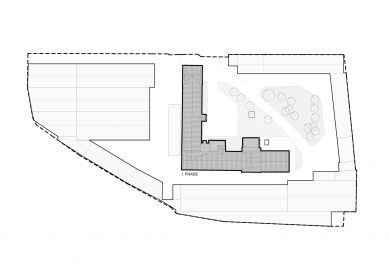
Although the spinning mill lies on the outskirts of Kežmarok, within the city’s industrial zone, it holds the potential to become a new urban focal point. The design introduces a public realm that organically links the different parts of the complex and makes the historic building accessible to both residents and visitors.
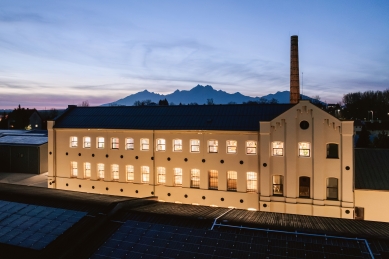
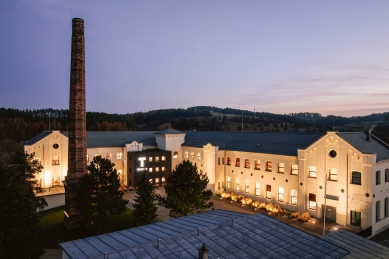
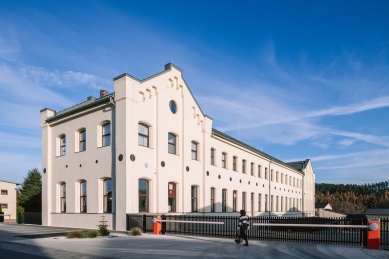
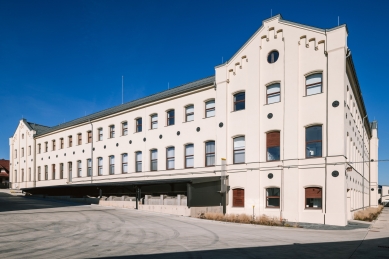
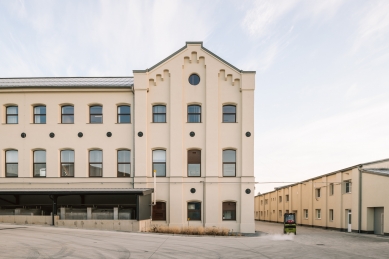
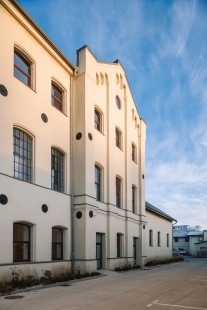
The project envisions a balanced mix of production, cultural, recreational, and social uses. The ground floor of the new extension will host a café, a company store, and a museum dedicated to the history of flax processing - bringing the story of craftsmanship closer to the public. The first phase of the redevelopment, now completed, focused primarily on the restoration and adaptive reuse of the original building for production, administrative offices, tasting rooms, and guest apartments.
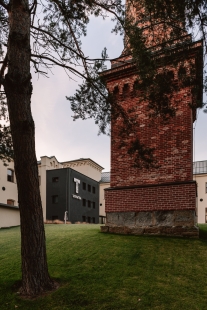
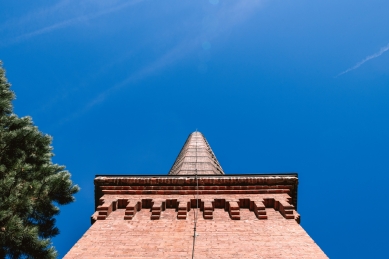
As a listed cultural monument, the project was developed in close collaboration with the Heritage Office. Great care was taken to preserve authentic details - from the cast-iron reinforcements adorned with flax-flower motifs to the original brick chimney, which will soon be transformed into a panoramic viewing tower overlooking the Tatra Mountains.
Connecting History with a New Function
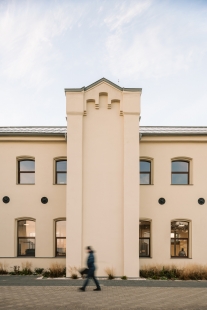
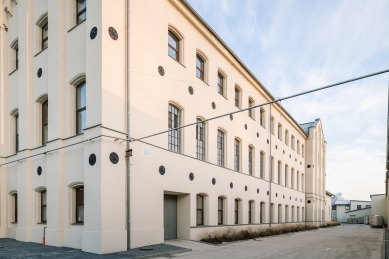
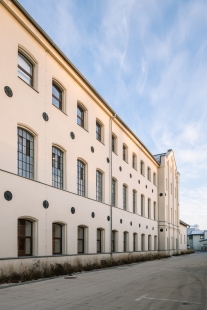
Preserving the historical layer was central to the design approach. From the very beginning, the team worked with deep respect for the building’s industrial character, seen as an essential part of the site’s identity. Later additions that disrupted the proportions and silhouette of the original structure - most notably the boiler house - were removed, restoring the building’s authentic massing. One smaller extension was retained for functional reasons, providing staff facilities, yet it was visually detached from the main volume to maintain architectural clarity.
A restrained material palette reinforces the dialogue between old and new. The exposed cast-iron structure of the original building is complemented by terracotta flooring and light-toned plaster finishes. The new layers remain intentionally neutral, allowing the historic structure and its patina to take center stage.
Interior and technical solutions
Inside, the design highlights the clarity of the building’s original structural logic. Cast-iron columns, brick vaults, and semi-vaulted ceilings were carefully preserved. The historic material surfaces were cleaned, and the walls repainted to maintain their natural texture. New elements - flooring, railings, lighting - were introduced in a simple and purposeful manner, ensuring they complement rather than dominate the space.
From a technical standpoint, the greatest challenge was ensuring fire safety due to the presence of alcohol and storage facilities. All interventions were implemented with precision to minimize their visual impact on the architecture.
The value of the project
The greatest achievement of the mill’s renewal lies in giving the building a new function without losing its soul. The project combines respect for history with a forward-looking adaptation, creating a space that has the potential to become a vibrant hub within this once purely industrial enclave.
Beyond the renovation itself, the development also introduces a new public space—a missing piece in this part of Kežmarok. In this sense, the project represents not only the preservation of a monument but also its transformation into a living place, where the industrial past meets contemporary urban life.
The former spinning mill complex in Kežmarok, founded in 1860 by Karol Wein, once stood among the most advanced factories in the Austro-Hungarian Empire. At a time when textile production flourished in the foothills of the High Tatras, it represented a significant industrial enterprise. Production continued uninterrupted until 1946, when the original owners were forced to leave the country. Later, the factory operated under the name Tatraľan—a mechanical flax spinning and weaving mill employing up to 2,500 workers.
Following the economic transition in former Czechoslovakia after 1989, production ceased. Despite decades of decline, the complex endured, and its architectural value was officially recognized when the main production building was declared a National Cultural Monument.
When the site passed into the hands of its current investor, it was in a state of serious disrepair. A stream runs directly beneath the building, and parts of its structure rest on wooden piles that had begun to decay. Moisture and repeated water infiltration had damaged the masonry, floors, and ceilings—making extensive structural and conservation work indispensable.
Architectural Concept and Relationship to the City
In 2019, the new owner launched an architectural competition with the goal of creating a contemporary production and administrative facility for a renowned spirits manufacturer—seamlessly integrated into the historic structure. Our winning proposal emphasized the connection between the site’s industrial heritage and its new architectural and functional layer, opening the complex to the public once again.
Although the spinning mill lies on the outskirts of Kežmarok, within the city’s industrial zone, it holds the potential to become a new urban focal point. The design introduces a public realm that organically links the different parts of the complex and makes the historic building accessible to both residents and visitors.
The project envisions a balanced mix of production, cultural, recreational, and social uses. The ground floor of the new extension will host a café, a company store, and a museum dedicated to the history of flax processing - bringing the story of craftsmanship closer to the public. The first phase of the redevelopment, now completed, focused primarily on the restoration and adaptive reuse of the original building for production, administrative offices, tasting rooms, and guest apartments.
As a listed cultural monument, the project was developed in close collaboration with the Heritage Office. Great care was taken to preserve authentic details - from the cast-iron reinforcements adorned with flax-flower motifs to the original brick chimney, which will soon be transformed into a panoramic viewing tower overlooking the Tatra Mountains.
Connecting History with a New Function
Preserving the historical layer was central to the design approach. From the very beginning, the team worked with deep respect for the building’s industrial character, seen as an essential part of the site’s identity. Later additions that disrupted the proportions and silhouette of the original structure - most notably the boiler house - were removed, restoring the building’s authentic massing. One smaller extension was retained for functional reasons, providing staff facilities, yet it was visually detached from the main volume to maintain architectural clarity.
A restrained material palette reinforces the dialogue between old and new. The exposed cast-iron structure of the original building is complemented by terracotta flooring and light-toned plaster finishes. The new layers remain intentionally neutral, allowing the historic structure and its patina to take center stage.
Interior and technical solutions
Inside, the design highlights the clarity of the building’s original structural logic. Cast-iron columns, brick vaults, and semi-vaulted ceilings were carefully preserved. The historic material surfaces were cleaned, and the walls repainted to maintain their natural texture. New elements - flooring, railings, lighting - were introduced in a simple and purposeful manner, ensuring they complement rather than dominate the space.
From a technical standpoint, the greatest challenge was ensuring fire safety due to the presence of alcohol and storage facilities. All interventions were implemented with precision to minimize their visual impact on the architecture.
The value of the project
The greatest achievement of the mill’s renewal lies in giving the building a new function without losing its soul. The project combines respect for history with a forward-looking adaptation, creating a space that has the potential to become a vibrant hub within this once purely industrial enclave.
Beyond the renovation itself, the development also introduces a new public space—a missing piece in this part of Kežmarok. In this sense, the project represents not only the preservation of a monument but also its transformation into a living place, where the industrial past meets contemporary urban life.
BEEF ARCHITEKTI









0 comments
add comment